Links
Life events
AD 646
Birth in Medina
Abd al-Malik ibn Marwan was born in Medina, part of the Umayyad family, which would later become the ruling dynasty of the Islamic Caliphate.
Abd al-Malik ibn Marwan was born in Medina, part of the Umayyad family, which would later become the ruling dynasty of the Islamic Caliphate.
Wikipedia ↗
AD 660
Education in Medina
Abd al-Malik received his early education in Medina, studying under prominent scholars and developing a strong foundation in Islamic law and governance.
Abd al-Malik received his early education in Medina, studying under prominent scholars and developing a strong foundation in Islamic law and governance.
Wikipedia ↗
AD 684
Battle of Marj Rahit
Abd al-Malik's father, Marwan I, secured the Umayyad caliphate at the Battle of Marj Rahit, near Damascus, against the Zubayrids, consolidating Umayyad power.
Abd al-Malik's father, Marwan I, secured the Umayyad caliphate at the Battle of Marj Rahit, near Damascus, against the Zubayrids, consolidating Umayyad power.
Wikipedia ↗
AD 685
Appointment as Governor of Palestine
Abd al-Malik was appointed as the governor of Palestine by Caliph Marwan I, marking his entry into high-level political administration.
Abd al-Malik was appointed as the governor of Palestine by Caliph Marwan I, marking his entry into high-level political administration.
Wikipedia ↗
AD 685
Coronation in Damascus
Following the death of his father, Abd al-Malik was proclaimed Caliph in Damascus, becoming the fifth Umayyad caliph and beginning his reign over the Islamic empire.
Following the death of his father, Abd al-Malik was proclaimed Caliph in Damascus, becoming the fifth Umayyad caliph and beginning his reign over the Islamic empire.
Wikipedia ↗
AD 691
Battle of Maskin
Abd al-Malik defeated Mus'ab ibn al-Zubayr at the Battle of Maskin, near the Tigris River, reasserting Umayyad control over Iraq and eliminating a key rival.
Abd al-Malik defeated Mus'ab ibn al-Zubayr at the Battle of Maskin, near the Tigris River, reasserting Umayyad control over Iraq and eliminating a key rival.
Wikipedia ↗
AD 691
Construction of the Dome of the Rock
Abd al-Malik commissioned the construction of the Dome of the Rock in Jerusalem, a significant architectural and religious monument in Islamic history.
Abd al-Malik commissioned the construction of the Dome of the Rock in Jerusalem, a significant architectural and religious monument in Islamic history.
Wikipedia ↗
AD 692
Siege of Mecca
Abd al-Malik's forces, led by Al-Hajjaj ibn Yusuf, besieged Mecca and defeated Abd Allah ibn al-Zubayr, reunifying the Islamic Caliphate under Umayyad rule.
Abd al-Malik's forces, led by Al-Hajjaj ibn Yusuf, besieged Mecca and defeated Abd Allah ibn al-Zubayr, reunifying the Islamic Caliphate under Umayyad rule.
Wikipedia ↗
AD 695
Conquest of Egypt
Abd al-Malik's forces reasserted Umayyad control over Egypt, securing a vital province for the caliphate and ensuring stability in the region.
Abd al-Malik's forces reasserted Umayyad control over Egypt, securing a vital province for the caliphate and ensuring stability in the region.
Wikipedia ↗
AD 697
Reforms in Damascus
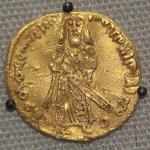
Abd al-Malik implemented significant administrative reforms, including the introduction of a unified Islamic currency and the establishment of Arabic as the official language of the empire.
Abd al-Malik implemented significant administrative reforms, including the introduction of a unified Islamic currency and the establishment of Arabic as the official language of the empire.
Wikipedia ↗
AD 701
Rebellion of Ibn al-Ash'ath
Abd al-Malik faced and suppressed a major rebellion led by Ibn al-Ash'ath in Iraq, reaffirming Umayyad authority in the region.
Abd al-Malik faced and suppressed a major rebellion led by Ibn al-Ash'ath in Iraq, reaffirming Umayyad authority in the region.
Wikipedia ↗
AD 705
Death in Damascus
Abd al-Malik died in Damascus after ruling for 20 years, leaving behind a centralized and strengthened Umayyad Caliphate that would continue under his successors.
Abd al-Malik died in Damascus after ruling for 20 years, leaving behind a centralized and strengthened Umayyad Caliphate that would continue under his successors.
Wikipedia ↗
Article
Life Summary
Abd al-Malik ibn Marwan was born in 646 CE in Medina, part of the influential Umayyad clan of the Quraysh tribe. His early life was shaped by the political turmoil following the assassination of the third caliph, Uthman, and the subsequent First Fitna (Islamic civil war). Abd al-Malik’s father, Marwan I, briefly became caliph in 684 CE, but it was Abd al-Malik who solidified Umayyad power after ascending to the caliphate in 685 CE. His reign began during a period of fragmentation, with rival claimants like Ibn al-Zubayr controlling Mecca and parts of Arabia. Abd al-Malik spent the early years of his rule consolidating power, defeating Ibn al-Zubayr in 692 CE, and reunifying the Islamic empire. He ruled until his death in 705 CE, leaving behind a legacy of administrative and military reforms that shaped the Islamic world for centuries.
Historical Context
Abd al-Malik’s reign occurred during a critical phase in Islamic history, marked by the transition from a loosely organized community of believers to a centralized imperial state. The Umayyad Caliphate, founded by Muawiya I, faced internal dissent and external threats, including the Byzantine Empire and regional rebellions. Abd al-Malik’s leadership was pivotal in stabilizing the empire. His reforms laid the groundwork for the Islamic Golden Age, influencing governance, culture, and religion. The era was also defined by the expansion of Islamic rule into North Africa and the Iberian Peninsula, setting the stage for future conquests and the spread of Islam.
Beliefs
Abd al-Malik was a devout Muslim who sought to strengthen the religious and political unity of the Islamic community. He emphasized the primacy of Arabic as the language of administration and religion, reinforcing the cultural and linguistic identity of the empire. His policies reflected a commitment to Sunni Islam, though he also navigated the complexities of sectarian divisions, particularly with the Shi’a and Kharijites. His construction of the Dome of the Rock in Jerusalem symbolized his vision of Islam as a unifying force, blending religious devotion with imperial ambition.
Key Achievements
- Centralized Administration: Reformed the bureaucracy by replacing Persian and Greek with Arabic as the official language, standardizing record-keeping and communication.
- Coinage Reform: Introduced the first Islamic gold and silver coins, replacing Byzantine and Sassanian currency, which facilitated trade and economic stability.
- Military Campaigns: Crushed the rebellion of Ibn al-Zubayr, reunifying the Islamic empire, and expanded Umayyad control into North Africa and Transoxiana.
- Construction of the Dome of the Rock: Commissioned the iconic shrine in Jerusalem, symbolizing Islamic dominance and religious significance in the Holy Land.
- Postal System: Established the barid, an efficient postal and intelligence network, improving communication across the vast empire.
- Legal and Religious Reforms: Standardized Islamic practices and jurisprudence, laying the foundation for future developments in Islamic law.
- Infrastructure Development: Built roads, bridges, and waystations to facilitate trade, travel, and military movement, enhancing imperial cohesion.