Links
Life events
Wikipedia ↗
Wikipedia ↗
Wikipedia ↗
Wikipedia ↗
Wikipedia ↗
Article
Life Summary
Abraha al-Ashram, also known as Abraha the Abyssinian, was a prominent figure in the 6th century CE. Originally a slave or military commander in the Aksumite Kingdom (modern-day Ethiopia and Eritrea), he rose to power as the viceroy of Yemen, then under Aksumite control. According to historical accounts, Abraha seized power from the previous Aksumite ruler, Esimiphaios, and declared himself an independent king of Himyar (southern Arabia). He is best known for his ambitious but ultimately failed military campaign against Mecca in 570 CE, an event referenced in the Quran as the Year of the Elephant (‘Ām al-Fīl).
Abraha was a devout Christian and sought to promote Christianity in the Arabian Peninsula. He is credited with constructing a grand cathedral in Sana'a, known as al-Qalis, intending to make it a pilgrimage center rivaling Mecca. His reign in Yemen was marked by efforts to consolidate power, suppress rebellions, and maintain control over trade routes. The exact circumstances of his death are unclear, but it is believed he died shortly after his failed Meccan campaign, possibly due to illness or political instability.
Historical Context
Abraha's rise and reign occurred during a period of intense geopolitical rivalry in the Arabian Peninsula and the broader Red Sea region. The Aksumite Kingdom, a Christian empire, sought to expand its influence into southern Arabia, competing with the Sassanian Persian Empire for control over trade routes and religious dominance. The Himyarite Kingdom, which Abraha ruled, had previously been a Jewish state but was conquered by Aksum in the early 6th century. Abraha's rule represented the height of Aksumite influence in Arabia, but his defeat at Mecca marked the beginning of its decline in the region.
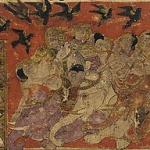
The Year of the Elephant (570 CE) is a pivotal event in Islamic tradition, as it is believed to be the year of the Prophet Muhammad's birth. Abraha's campaign against Mecca, which included the use of war elephants, was seen as a divine intervention when his forces were reportedly destroyed by a miraculous event (described in the Quran as birds carrying stones). This event solidified Mecca's religious significance and set the stage for the rise of Islam in the following decades.
Beliefs
Abraha was a staunch Christian and sought to spread Christianity in the Arabian Peninsula. His construction of the al-Qalis cathedral in Sana'a was a direct challenge to the Kaaba in Mecca, which was a major pagan pilgrimage site at the time. His actions reflected the broader religious and political competition between Christian Aksum and the polytheistic tribes of Arabia. Abraha's faith was likely aligned with the Miaphysite Christianity prevalent in the Aksumite Kingdom, which emphasized the unified nature of Christ's divine and human aspects.
Key Achievements
- Seized control of Himyarite Yemen: Overthrew the Aksumite ruler Esimiphaios and established himself as an independent king, ruling from Sana'a.
- Constructed the al-Qalis cathedral: Built a grand Christian cathedral in Sana'a to rival the Kaaba in Mecca, aiming to redirect pilgrimage traffic.
- Consolidated power in southern Arabia: Suppressed rebellions and maintained control over key trade routes, ensuring Aksumite dominance in the region.
- Led the Year of the Elephant campaign: Organized a large-scale military expedition against Mecca, which, despite its failure, became a legendary event in Islamic history.
- Promoted Christianity in Arabia: Actively worked to spread Christian influence in the Arabian Peninsula, challenging the prevailing pagan traditions.