Links
Life events
Wikipedia ↗
Wikipedia ↗
Wikipedia ↗
Wikipedia ↗
Wikipedia ↗
Wikipedia ↗
Wikipedia ↗
Article
Life Summary
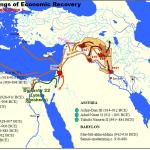
Adad-nirari II (reigned 911–891 BCE) was the king of Assyria and the first ruler of what is now considered the Neo-Assyrian Empire. He was the son of Ashur-dan II, and his reign marked a turning point in Assyrian history, ending a period of decline and initiating a phase of expansion and consolidation. Adad-nirari II conducted multiple military campaigns, particularly against the Arameans in the west and the Babylonians in the south, securing Assyria’s borders and reasserting its dominance in Mesopotamia. His campaigns extended Assyrian control over key trade routes and resources, laying the foundation for future Assyrian expansion. He also undertook administrative reforms, strengthening the central government and improving infrastructure. Adad-nirari II died in 891 BCE, leaving behind a more powerful and stable Assyrian state.
Historical Context
Adad-nirari II ruled during a critical period in Mesopotamian history, as the Assyrian Empire sought to recover from a prolonged decline. The late 2nd millennium BCE had seen Assyria weakened by internal strife, external invasions, and the rise of rival powers like the Arameans and Babylonians. His reign marked the beginning of the Neo-Assyrian Empire, a period characterized by aggressive expansion, military innovation, and administrative efficiency. Adad-nirari II’s campaigns were not merely defensive; they were part of a broader strategy to restore Assyria’s former glory and establish it as the dominant power in the region. His successes set the stage for the later conquests of Assyrian kings like Ashurnasirpal II and Shalmaneser III, who would further expand the empire’s reach. The Neo-Assyrian Empire under his successors became one of the most formidable states of the ancient world, known for its military prowess, advanced bureaucracy, and cultural achievements.
Beliefs
Adad-nirari II, like other Assyrian kings, adhered to the traditional Mesopotamian religious beliefs centered around the worship of the god Ashur, the patron deity of Assyria. The king was considered the earthly representative of Ashur, and his military campaigns were often framed as divine missions to expand the god’s dominion. Adad-nirari II’s inscriptions frequently invoke the gods, particularly Ashur and Adad (the storm god), to legitimize his rule and justify his conquests. He also participated in religious rituals and temple restorations, reinforcing the connection between kingship and divinity in Assyrian culture.
Key Achievements
- Military Campaigns: Conducted successful campaigns against the Arameans, securing Assyria’s western borders and reasserting control over key regions like the Khabur Triangle.
- Babylonian Conflict: Defeated the Babylonian king Shamash-mudammiq and later his successor Nabu-shuma-ukin I, forcing Babylon to cede territory and pay tribute, thereby restoring Assyrian influence in southern Mesopotamia.
- Administrative Reforms: Strengthened the central government, improved tax collection, and reorganized provincial administration to enhance efficiency and control.
- Infrastructure Development: Oversaw the construction and repair of roads, canals, and fortifications, facilitating trade and military movement.
- Foundation of Neo-Assyrian Empire: His reign marked the beginning of the Neo-Assyrian period, setting the stage for Assyria’s rise as a dominant regional power.
- Diplomatic Relations: Established treaties and alliances with neighboring states, ensuring stability and reducing external threats.
- Cultural Revival: Promoted Assyrian cultural and religious traditions, including the restoration of temples and the commissioning of royal inscriptions to document his achievements.