Links
Life events
Wikipedia ↗
Wikipedia ↗
Wikipedia ↗
Wikipedia ↗
Wikipedia ↗
Wikipedia ↗
Wikipedia ↗
Wikipedia ↗
Wikipedia ↗
Article
Life Summary
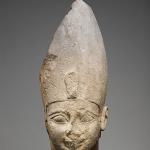
Ahmose I, also known as Amosis I, was born around 1549 BCE in Thebes, Egypt, to Pharaoh Seqenenre Tao and Queen Ahhotep I. He ascended to the throne as a child after the death of his brother, Kamose, who had begun the campaign against the Hyksos, a foreign dynasty ruling northern Egypt. Ahmose I continued this campaign, besieging and capturing the Hyksos capital, Avaris, around 1550 BCE, and driving them out of Egypt. He then pursued them into Canaan, laying siege to Sharuhen for three years before finally defeating them. Following this victory, Ahmose I reunified Egypt and secured its borders, launching military campaigns into Nubia and Canaan to restore Egyptian control over these regions. He also initiated large-scale building projects, including temples and monuments, to revitalize Egypt’s economy and religious institutions. Ahmose I ruled for approximately 25 years and died around 1524 BCE, succeeded by his son, Amenhotep I.
Historical Context
Ahmose I’s reign marked the transition from the Second Intermediate Period to the New Kingdom, a golden age of Egyptian power and prosperity. The Hyksos had ruled northern Egypt for over a century, introducing new military technologies like the chariot and composite bow, which Ahmose I later adopted and refined. His expulsion of the Hyksos and reunification of Egypt set the stage for the empire’s expansion under later pharaohs, such as Thutmose III and Ramses II. Ahmose I’s reign also saw the centralization of power under the pharaoh, the restoration of traditional Egyptian religious practices, and the establishment of Thebes as the political and religious capital of Egypt. His military campaigns and administrative reforms laid the foundation for Egypt’s dominance in the ancient world during the New Kingdom.
Beliefs
Ahmose I was a devout follower of the traditional Egyptian religion, particularly the worship of Amun, the patron deity of Thebes. He attributed his military successes to the god’s favor and dedicated much of his reign to restoring and expanding temples, including the Karnak Temple complex. Ahmose I also emphasized the divine nature of the pharaoh, reinforcing the idea that the ruler was the intermediary between the gods and the people. His devotion to Amun helped solidify the god’s prominence in Egyptian religion, which would continue throughout the New Kingdom.
Key Achievements
- Expulsion of the Hyksos: Successfully drove the Hyksos out of Egypt, ending their rule over northern Egypt and reunifying the country.
- Reunification of Egypt: Restored centralized rule over Upper and Lower Egypt, marking the beginning of the New Kingdom.
- Military Campaigns: Conducted successful campaigns into Nubia and Canaan, securing Egypt’s borders and reasserting control over these regions.
- Building Projects: Initiated large-scale construction projects, including the restoration and expansion of temples, such as the Karnak Temple complex.
- Administrative Reforms: Strengthened the central government and reorganized Egypt’s administration, laying the groundwork for the empire’s future expansion.
- Introduction of New Military Technologies: Adopted and refined Hyksos military innovations, such as the chariot and composite bow, enhancing Egypt’s military capabilities.
- Establishment of Thebes as Capital: Solidified Thebes as the political and religious center of Egypt, a status it would hold for centuries.
- Dynastic Foundation: Founded the Eighteenth Dynasty, which would produce some of Egypt’s most famous pharaohs, including Hatshepsut, Thutmose III, and Tutankhamun.