Links
Life events
1,380 BC
Birth in Thebes
Akhenaten, originally named Amenhotep IV, was born in Thebes, the religious and political capital of Egypt during the 18th Dynasty. He was the son of Pharaoh Amenhotep III and Queen Tiye.
Akhenaten, originally named Amenhotep IV, was born in Thebes, the religious and political capital of Egypt during the 18th Dynasty. He was the son of Pharaoh Amenhotep III and Queen Tiye.
Wikipedia ↗
1,360 BC
Co-regency with Amenhotep III
Akhenaten began his co-regency with his father, Amenhotep III, in Thebes. This period marked the early stages of his exposure to governance and religious affairs.
Akhenaten began his co-regency with his father, Amenhotep III, in Thebes. This period marked the early stages of his exposure to governance and religious affairs.
Wikipedia ↗
1,353 BC
Coronation as Pharaoh
Akhenaten ascended to the throne as the sole ruler of Egypt after the death of his father, Amenhotep III. His reign began in Thebes, where he initially maintained traditional religious practices.
Akhenaten ascended to the throne as the sole ruler of Egypt after the death of his father, Amenhotep III. His reign began in Thebes, where he initially maintained traditional religious practices.
Wikipedia ↗
1,350 BC
Introduction of Atenism
Akhenaten initiated a religious revolution by promoting the worship of Aten, the sun disk, as the supreme deity. This marked the beginning of his monotheistic reforms in Thebes.
Akhenaten initiated a religious revolution by promoting the worship of Aten, the sun disk, as the supreme deity. This marked the beginning of his monotheistic reforms in Thebes.
Wikipedia ↗
1,348 BC
Founding of Akhetaten
Akhenaten founded a new capital city, Akhetaten (modern-day Amarna), dedicated to the worship of Aten. This move symbolized his break from the traditional religious centers like Thebes.
Akhenaten founded a new capital city, Akhetaten (modern-day Amarna), dedicated to the worship of Aten. This move symbolized his break from the traditional religious centers like Thebes.
Wikipedia ↗
1,346 BC
Relocation to Akhetaten
Akhenaten and his court relocated to Akhetaten, abandoning Thebes. The city became the center of political, religious, and cultural life during his reign.
Akhenaten and his court relocated to Akhetaten, abandoning Thebes. The city became the center of political, religious, and cultural life during his reign.
Wikipedia ↗
1,345 BC
Construction of the Great Aten Temple
Akhenaten oversaw the construction of the Great Aten Temple in Akhetaten, a monumental structure dedicated to the worship of Aten, reflecting his religious reforms.
Akhenaten oversaw the construction of the Great Aten Temple in Akhetaten, a monumental structure dedicated to the worship of Aten, reflecting his religious reforms.
Wikipedia ↗
1,343 BC
Artistic Revolution in Amarna
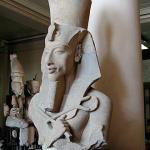
Akhenaten's reign saw a radical shift in Egyptian art, known as the Amarna style, characterized by naturalism and depictions of the royal family in intimate, informal settings.
Akhenaten's reign saw a radical shift in Egyptian art, known as the Amarna style, characterized by naturalism and depictions of the royal family in intimate, informal settings.
Wikipedia ↗
1,340 BC
Neglect of Foreign Affairs
Akhenaten's focus on religious reforms led to the neglect of Egypt's foreign affairs, including the loss of territories in Syria and Palestine, as documented in the Amarna Letters.
Akhenaten's focus on religious reforms led to the neglect of Egypt's foreign affairs, including the loss of territories in Syria and Palestine, as documented in the Amarna Letters.
Wikipedia ↗
1,336 BC
Death of Queen Nefertiti
Queen Nefertiti, Akhenaten's influential wife and co-regent, likely died or disappeared from public records during this period, marking a significant shift in Akhenaten's reign.
Queen Nefertiti, Akhenaten's influential wife and co-regent, likely died or disappeared from public records during this period, marking a significant shift in Akhenaten's reign.
Wikipedia ↗
1,336 BC
Death in Akhetaten
Akhenaten died in Akhetaten, ending his controversial reign. His religious reforms were largely abandoned after his death, and the capital was moved back to Thebes.
Akhenaten died in Akhetaten, ending his controversial reign. His religious reforms were largely abandoned after his death, and the capital was moved back to Thebes.
Wikipedia ↗
Article
Life Summary
Akhenaten, originally named Amenhotep IV, was born around 1380 BCE as the son of Pharaoh Amenhotep III and Queen Tiye. He ascended to the throne of Egypt in approximately 1353 BCE, ruling for about 17 years during the 18th Dynasty. Early in his reign, he initiated a religious revolution by promoting the worship of Aten, the sun disk, as the supreme deity, effectively sidelining the traditional Egyptian pantheon led by Amun. He changed his name to Akhenaten, meaning "Effective for Aten," to reflect his devotion. Akhenaten moved the capital from Thebes to a new city he founded, Akhetaten (modern-day Amarna), which became the center of his religious and political reforms. His reign saw a dramatic shift in artistic styles, favoring more naturalistic and intimate depictions of the royal family. Akhenaten's death around 1336 BCE remains somewhat mysterious, but he was succeeded by his son Tutankhaten, who later reverted to the traditional religious practices and changed his name to Tutankhamun.
Historical Context
Akhenaten ruled during a period of significant wealth and power for Egypt, known as the New Kingdom. The 18th Dynasty was marked by territorial expansion, cultural flourishing, and a strong centralized government. However, Akhenaten's religious reforms were radical and disruptive. By elevating Aten above all other gods, he challenged the authority of the powerful Amun priesthood, which had grown influential and wealthy. His monotheistic experiment, often considered one of the earliest instances of monotheism in history, was short-lived. After his death, his successors, including Tutankhamun, worked to restore the traditional religious order, erasing much of Akhenaten's legacy. Despite this, his reign remains a fascinating period in Egyptian history, offering insights into the interplay between religion, politics, and art.
Beliefs
- Akhenaten believed in the supremacy of Aten, the sun disk, as the sole god, rejecting the traditional Egyptian pantheon.
- He saw himself as the sole intermediary between Aten and the people, emphasizing a direct and personal relationship with the deity.
- His religious philosophy was expressed in the "Great Hymn to the Aten," which praises Aten as the creator and sustainer of all life.
- He promoted a more naturalistic and less rigid artistic style, reflecting his belief in the beauty and divinity of the natural world.
Key Achievements
- Religious Revolution: Introduced Atenism, a monotheistic worship of Aten, which was a dramatic departure from Egypt's traditional polytheistic religion.
- Founding of Akhetaten: Established a new capital city, Akhetaten (modern-day Amarna), dedicated to the worship of Aten and designed to reflect his religious ideals.
- Artistic Reforms: Pioneered the Amarna art style, characterized by more naturalistic and intimate depictions of the royal family and everyday life, breaking away from the rigid conventions of traditional Egyptian art.
- Cultural Shift: Temporarily shifted Egypt's religious and cultural focus, influencing later religious thought and artistic expression.
- Diplomatic Correspondence: Maintained extensive diplomatic relations, as evidenced by the Amarna Letters, a collection of clay tablets detailing correspondence with foreign rulers and vassals.