Links
Life events
Wikipedia ↗
Wikipedia ↗
Wikipedia ↗
Wikipedia ↗
Wikipedia ↗
Wikipedia ↗
Wikipedia ↗
Wikipedia ↗
Wikipedia ↗
Wikipedia ↗
Article
Life Summary
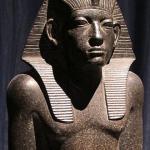
Amenemhat III, also known as Nimaatre, was the sixth pharaoh of the Twelfth Dynasty of ancient Egypt. He ruled from approximately 1860 BCE to 1814 BCE, succeeding his father, Senusret III. His reign is often considered the golden age of the Middle Kingdom due to its stability, prosperity, and architectural achievements. Amenemhat III was born into a period of strong centralized rule, and he continued his father's policies of administrative reform and military control over Nubia.
Early in his reign, Amenemhat III focused on consolidating power and maintaining Egypt's economic prosperity. He undertook extensive building projects, including the construction of his pyramid complex at Dahshur, later abandoned in favor of a new pyramid at Hawara. This second pyramid, known as the "Black Pyramid," became one of his most notable architectural contributions. He also developed the Faiyum region, transforming it into a fertile agricultural area through large-scale irrigation projects.
Amenemhat III ruled for approximately 45 years, one of the longest reigns of the Middle Kingdom. He was succeeded by his daughter, Sobekneferu, as his son, Amenemhat IV, predeceased him. His death marked the beginning of the decline of the Twelfth Dynasty.
Historical Context
Amenemhat III's reign occurred during the Middle Kingdom period of ancient Egypt (circa 2055–1650 BCE), a time characterized by strong centralized governance, economic prosperity, and cultural flourishing. The Twelfth Dynasty, to which Amenemhat III belonged, is often regarded as the peak of the Middle Kingdom, with rulers who expanded Egypt's influence, secured its borders, and undertook monumental building projects.
Egypt during this era was a highly organized state with a complex bureaucracy. The pharaohs of the Twelfth Dynasty implemented administrative reforms to strengthen central authority, reducing the power of regional governors (nomarchs) who had previously threatened the unity of the kingdom. Amenemhat III continued these policies, ensuring stability and economic growth. His reign saw increased trade with neighboring regions, including Nubia, Syria, and the Levant, which enriched Egypt's economy and cultural exchange.
Amenemhat III's focus on infrastructure, particularly his development of the Faiyum region, demonstrated the importance of agriculture and water management in sustaining Egypt's prosperity. His building projects, including temples, pyramids, and irrigation systems, reflected the pharaoh's role as both a political and religious leader. His reign also saw the continuation of literary and artistic achievements, with works like the "Instructions of Amenemhat" (though likely attributed to his namesake, Amenemhat I) serving as didactic texts for future generations.
Beliefs
Amenemhat III, like all pharaohs, was considered a divine ruler, the intermediary between the gods and the people of Egypt. He was associated with the god Amun, whose cult grew in prominence during the Middle Kingdom. The pharaoh's role was to maintain Ma'at (cosmic order, truth, and justice), ensuring the prosperity and stability of Egypt. His building projects, particularly temples and pyramids, were not only symbols of his power but also religious acts intended to honor the gods and secure his place in the afterlife.
Amenemhat III's pyramid complexes were designed to facilitate his journey into the afterlife, reflecting the Egyptian belief in the importance of proper burial and the continuation of the soul. The inclusion of temples and offerings in these complexes underscored the religious significance of his rule.
Key Achievements
- Construction of the Black Pyramid at Dahshur and the Pyramid at Hawara: These monumental structures showcased the architectural and engineering prowess of the Middle Kingdom and served as his final resting places.
- Development of the Faiyum Region: Transformed the Faiyum into a fertile agricultural area through extensive irrigation projects, including the construction of canals and the Lake Moeris dam, boosting Egypt's food production.
- Administrative Reforms: Continued his father's policies of centralizing power, reducing the influence of regional governors, and strengthening the bureaucracy to maintain stability and control.
- Military and Economic Expansion: Secured Egypt's borders, particularly in Nubia, and expanded trade networks, enriching the kingdom's economy through commerce with neighboring regions.
- Cultural and Literary Contributions: His reign saw the continuation of Middle Kingdom literary traditions, with texts like the "Instructions of Amenemhat" (though likely attributed to Amenemhat I) serving as moral and political guides.
- Temple Construction: Built and expanded temples dedicated to gods like Sobek and Amun, reinforcing the religious and cultural significance of his rule.
- Long and Stable Reign: Ruled for approximately 45 years, one of the longest reigns of the Middle Kingdom, ensuring a period of prolonged peace and prosperity for Egypt.