Links
Life events
AD 214
Birth in Sirmium
Lucius Domitius Aurelianus, later known as Aurelian, was born in Sirmium, Pannonia (modern Sremska Mitrovica, Serbia). His family was of modest origin, and he rose through the military ranks to become emperor.
Lucius Domitius Aurelianus, later known as Aurelian, was born in Sirmium, Pannonia (modern Sremska Mitrovica, Serbia). His family was of modest origin, and he rose through the military ranks to become emperor.
Wikipedia ↗
AD 235
Military Service in Thrace
Aurelian began his military career in Thrace, serving under Emperor Maximinus Thrax. His leadership and tactical skills earned him rapid promotions within the Roman army.
Aurelian began his military career in Thrace, serving under Emperor Maximinus Thrax. His leadership and tactical skills earned him rapid promotions within the Roman army.
Wikipedia ↗
AD 270
Coronation in Rome
Aurelian was proclaimed emperor by his troops in Sirmium and later crowned in Rome. He inherited an empire in crisis, with threats from multiple fronts and economic instability.
Aurelian was proclaimed emperor by his troops in Sirmium and later crowned in Rome. He inherited an empire in crisis, with threats from multiple fronts and economic instability.
Wikipedia ↗
AD 271
Defeat of the Goths in Thrace
Aurelian defeated the Gothic invaders in Thrace, securing the Danube frontier and earning the title 'Gothicus Maximus.' This victory stabilized the northern borders of the empire.
Aurelian defeated the Gothic invaders in Thrace, securing the Danube frontier and earning the title 'Gothicus Maximus.' This victory stabilized the northern borders of the empire.
Wikipedia ↗
AD 271
Construction of the Aurelian Walls
Aurelian ordered the construction of the Aurelian Walls in Rome to protect the city from barbarian invasions. The walls became a symbol of his efforts to restore Roman security.
Aurelian ordered the construction of the Aurelian Walls in Rome to protect the city from barbarian invasions. The walls became a symbol of his efforts to restore Roman security.
Wikipedia ↗
AD 272
Battle of Immae
Aurelian defeated the Palmyrene forces led by Queen Zenobia at the Battle of Immae, near Antioch. This victory marked the beginning of the end for Palmyrene dominance in the East.
Aurelian defeated the Palmyrene forces led by Queen Zenobia at the Battle of Immae, near Antioch. This victory marked the beginning of the end for Palmyrene dominance in the East.
Wikipedia ↗
AD 272
Capture of Palmyra
Aurelian besieged and captured the city of Palmyra, ending Zenobia's rule and reasserting Roman control over the eastern provinces. The city was later sacked after a rebellion.
Aurelian besieged and captured the city of Palmyra, ending Zenobia's rule and reasserting Roman control over the eastern provinces. The city was later sacked after a rebellion.
Wikipedia ↗
AD 273
Defeat of the Carpi
Aurelian defeated the Carpi, a Dacian tribe, near the Danube frontier. This victory further secured the empire's northern borders and earned him the title 'Carpicus Maximus.'
Aurelian defeated the Carpi, a Dacian tribe, near the Danube frontier. This victory further secured the empire's northern borders and earned him the title 'Carpicus Maximus.'
Wikipedia ↗
AD 274
Reform of the Currency
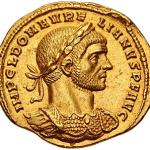
Aurelian introduced monetary reforms in Sirmium to stabilize the Roman economy, including the introduction of a new silver coin, the 'aurelianus,' to combat inflation.
Aurelian introduced monetary reforms in Sirmium to stabilize the Roman economy, including the introduction of a new silver coin, the 'aurelianus,' to combat inflation.
Wikipedia ↗
AD 274
Reunification of the Empire
After defeating the breakaway Gallic and Palmyrene empires, Aurelian reunified the Roman Empire under his rule. This marked the end of the Crisis of the Third Century.
After defeating the breakaway Gallic and Palmyrene empires, Aurelian reunified the Roman Empire under his rule. This marked the end of the Crisis of the Third Century.
Wikipedia ↗
AD 275
Death near Caenophrurium
Aurelian was assassinated by a group of officers near Caenophrurium (modern Çorlu, Turkey) while preparing for a campaign against Persia. His death was a result of a conspiracy within his inner circle.
Aurelian was assassinated by a group of officers near Caenophrurium (modern Çorlu, Turkey) while preparing for a campaign against Persia. His death was a result of a conspiracy within his inner circle.
Wikipedia ↗
Article
Life Summary
Lucius Domitius Aurelianus, known as Aurelian, was born on September 9, 214 or 215 CE in Dacia or Moesia, regions of the Roman Empire. Little is known about his early life, but he rose through the ranks of the Roman military, distinguishing himself as a skilled commander. Aurelian became emperor in 270 CE after the assassination of Emperor Claudius II Gothicus. His reign was marked by military campaigns aimed at restoring the empire's borders and reunifying its territories.
Aurelian's military prowess was evident in his campaigns against the Goths, Vandals, and other Germanic tribes. He successfully defended the empire against invasions and recaptured lost territories, including the Gallic Empire and the Palmyrene Empire. His efforts earned him the title Restitutor Orbis (Restorer of the World). Aurelian was assassinated by his own officers in September 275 CE near Caenophrurium in Thrace, a victim of a conspiracy fueled by fears of his strict discipline.
Historical Context
Aurelian's reign came during the Crisis of the Third Century, a period of military anarchy, economic instability, and external invasions that nearly led to the collapse of the Roman Empire. The empire was fragmented, with breakaway states like the Gallic Empire in the west and the Palmyrene Empire in the east. Aurelian's leadership was crucial in reunifying the empire and stabilizing its borders, setting the stage for the reforms of Diocletian and the eventual recovery of the empire.
His reign also marked a shift toward stronger central authority and the promotion of the cult of Sol Invictus (the Unconquered Sun), reflecting a move toward monotheistic tendencies in Roman religion. Aurelian's military and administrative reforms laid the groundwork for the later dominance of the Roman Empire under emperors like Diocletian and Constantine.
Beliefs
Aurelian was a devout follower of the cult of Sol Invictus, which he promoted as a unifying religious force within the empire. He believed in the divine protection of the sun god and saw himself as a restorer of both the empire's territorial integrity and its moral and religious values. His policies reflected a commitment to traditional Roman virtues, discipline, and loyalty to the state.
Key Achievements
- Reunification of the Roman Empire: Successfully recaptured the Gallic Empire and the Palmyrene Empire, restoring the empire's territorial integrity.
- Defense Against Invasions: Repelled invasions by the Goths, Vandals, Juthungi, and other Germanic tribes, securing the empire's borders.
- Military Reforms: Strengthened the Roman army by improving discipline, logistics, and fortifications, including the construction of the Aurelian Walls in Rome.
- Economic Reforms: Introduced new coinage to combat inflation and stabilize the economy, including the aurelianus silvered bronze coin.
- Religious Policies: Promoted the cult of Sol Invictus as a unifying religious force, laying the groundwork for later imperial religious policies.
- Administrative Reforms: Centralized authority and improved governance, setting the stage for Diocletian's reforms.
- Construction Projects: Initiated major building projects, including the Aurelian Walls, which protected Rome for centuries.