Links
Life events
Wikipedia ↗
Wikipedia ↗
Wikipedia ↗
Wikipedia ↗
Wikipedia ↗
Wikipedia ↗
Wikipedia ↗
Wikipedia ↗
Article
Life Summary
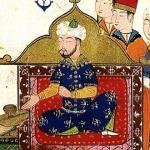
Bayezid I, also known as Bayezid the Thunderbolt (Yıldırım Bayezid), was born in 1354 in Edirne, the son of Sultan Murad I. He ascended to the Ottoman throne in 1389 after his father's assassination at the Battle of Kosovo. Bayezid quickly consolidated power, eliminating rivals and expanding Ottoman control in the Balkans and Anatolia. His reign was marked by military campaigns, including the conquest of Bulgaria, Thessaly, and parts of Serbia and Greece. In 1396, he defeated a Crusader army at the Battle of Nicopolis, further solidifying Ottoman dominance in Europe. However, his ambitions were checked by Timur (Tamerlane), who invaded Anatolia in 1402. Bayezid was defeated and captured at the Battle of Ankara, where he died in captivity in 1403, possibly by suicide or illness.
Historical Context
Bayezid I ruled during a pivotal period in Ottoman history, as the empire transitioned from a regional power to a dominant force in the Mediterranean and Balkans. His reign saw the Ottomans clash with European Crusaders, Byzantine remnants, and rival Turkic beyliks in Anatolia. The Battle of Nicopolis (1396) was one of the last major Crusades, demonstrating the Ottomans' growing threat to Christian Europe. However, Bayezid's defeat at Ankara in 1402 temporarily halted Ottoman expansion and plunged the empire into a civil war known as the Ottoman Interregnum. His capture by Timur highlighted the vulnerability of even the most powerful empires to external threats. Bayezid's legacy is one of rapid expansion and dramatic downfall, shaping the Ottoman Empire's trajectory in the 15th century.
Beliefs
Bayezid I was a devout Sunni Muslim and adhered to the principles of Islamic governance. He promoted the spread of Islam through military conquest and supported the construction of mosques and religious institutions. His policies reflected the Ottoman synthesis of Turkic warrior traditions and Islamic law, which became a cornerstone of the empire's identity. Bayezid also maintained the Ottoman practice of tolerance toward non-Muslim subjects, provided they paid the jizya tax and accepted Ottoman rule.
Key Achievements
- Conquest of Bulgaria (1393): Annexed the Bulgarian Tsardom, eliminating a major Balkan rival.
- Battle of Nicopolis (1396): Defeated a Crusader army led by King Sigismund of Hungary, securing Ottoman dominance in the Balkans.
- Expansion into Anatolia: Subdued several Turkic beyliks, consolidating Ottoman control over much of western Anatolia.
- Siege of Constantinople (1394–1402): Blockaded the Byzantine capital, though he failed to capture it before his defeat at Ankara.
- Military Reforms: Strengthened the Ottoman army, including the integration of Janissaries and the use of gunpowder artillery.
- Cultural Patronage: Commissioned mosques, madrasas, and public works, including the Ulu Cami (Great Mosque) in Bursa.
- Diplomatic Engagements: Negotiated with European powers, including France and Venice, to secure alliances or neutrality.
- Centralization of Power: Reduced the influence of Turkic nobles and strengthened the sultan's authority over the empire.