Links
Life events
Wikipedia ↗
Wikipedia ↗
Wikipedia ↗
Wikipedia ↗
Wikipedia ↗
Wikipedia ↗
Wikipedia ↗
Article
Life Summary
Bindusara, also known as Bindusara Maurya, was the second Mauryan Emperor of India, ruling from approximately 298 BCE to 272 BCE. He was the son of Chandragupta Maurya, the founder of the Mauryan Empire, and the father of Ashoka the Great. Born in Pataliputra, the capital of the Mauryan Empire, Bindusara inherited a vast empire that stretched across much of the Indian subcontinent. Little is known about his early life, but historical records suggest he was well-educated and trained in the art of governance and warfare.
Bindusara's reign was marked by the consolidation and expansion of the Mauryan Empire. He maintained the administrative systems established by his father and further extended the empire's boundaries, particularly in the southern regions of India. According to some accounts, he conquered the land between the two seas, likely referring to the Arabian Sea and the Bay of Bengal. Bindusara is also noted for his diplomatic relations with the Hellenistic world, particularly with the Seleucid Empire.
Bindusara's death around 272 BCE paved the way for his son Ashoka to ascend the throne. His legacy lies in his ability to preserve and expand the empire, setting the stage for Ashoka's renowned reign.
Historical Context
Bindusara ruled during the height of the Mauryan Empire, one of the largest and most powerful empires in ancient India. The Mauryan Empire was characterized by its centralized administration, extensive trade networks, and cultural achievements. Bindusara's reign occurred during a period of significant political and cultural development in India, with the empire serving as a melting pot of various religions, philosophies, and traditions.
The Mauryan Empire under Bindusara maintained strong diplomatic ties with neighboring regions, including the Hellenistic kingdoms that emerged after the death of Alexander the Great. This period saw the exchange of ideas, goods, and technologies between India and the Mediterranean world. Bindusara's rule was crucial in maintaining the stability and prosperity of the empire, which allowed for the flourishing of art, architecture, and literature.
Bindusara's significance in history lies in his role as a bridge between the foundational reign of Chandragupta Maurya and the transformative rule of Ashoka. His ability to govern a vast and diverse empire set the stage for Ashoka's policies of non-violence and religious tolerance.
Beliefs
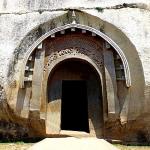
Bindusara is believed to have followed the Ajivika sect, a religious movement that emphasized asceticism and determinism. This sect was popular during the Mauryan period and was supported by several Mauryan rulers. Bindusara's patronage of the Ajivikas is noted in historical texts, although details about his personal beliefs and practices remain scarce.
Key Achievements
- Expansion of the Mauryan Empire: Bindusara extended the empire's boundaries, particularly in the southern regions of India, consolidating the territories inherited from his father.
- Diplomatic Relations: Maintained and strengthened diplomatic ties with the Hellenistic world, including the Seleucid Empire, facilitating cultural and economic exchanges.
- Administrative Continuity: Preserved and enhanced the centralized administrative systems established by Chandragupta Maurya, ensuring the efficient governance of the vast empire.
- Cultural Patronage: Supported various religious and philosophical movements, including the Ajivika sect, contributing to the cultural diversity of the Mauryan Empire.
- Stable Governance: Ensured the stability and prosperity of the Mauryan Empire, providing a strong foundation for Ashoka's reign and the empire's golden age.