Links
Life events
Wikipedia ↗
Wikipedia ↗
Wikipedia ↗
Wikipedia ↗
Wikipedia ↗
Wikipedia ↗
Wikipedia ↗
Wikipedia ↗
Wikipedia ↗
Article
Life Summary
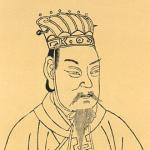
Cao Cao (曹操), born in 155 CE in Qiao County (modern Bozhou, Anhui), was a prominent warlord, statesman, and poet during the late Eastern Han Dynasty. His early life was marked by ambition and strategic brilliance; he rose to prominence by suppressing the Yellow Turban Rebellion in 184 CE. Over the next three decades, Cao Cao consolidated power in northern China, defeating rival warlords such as Yuan Shao at the Battle of Guandu (200 CE) and securing the emperor’s court at Xu City, effectively controlling the Han government.
Cao Cao’s career was defined by military innovation, administrative reforms, and cultural patronage. He implemented agricultural colonies (tuntian) to sustain his armies, reformed land taxation, and promoted meritocracy in government appointments. Despite his ruthless reputation, he was also a celebrated poet and patron of the arts, contributing to the development of Jian’an literature. He declared himself the King of Wei in 216 CE, though he never formally usurped the Han throne. Cao Cao died in 220 CE in Luoyang, leaving his son Cao Pi to establish the Wei Dynasty shortly after.
Historical Context
Cao Cao emerged during the collapse of the Eastern Han Dynasty (25–220 CE), a period of widespread corruption, peasant uprisings, and warlordism. The Han court had lost control over the empire, and regional warlords vied for dominance. Cao Cao’s ability to stabilize northern China, protect the Han emperor (though as a puppet), and implement effective governance set him apart from his contemporaries. His actions laid the groundwork for the Three Kingdoms period (220–280 CE), a defining era in Chinese history characterized by the division of China into the rival states of Wei, Shu, and Wu.
Cao Cao’s significance lies in his role as a unifier—though he never reunified China, his consolidation of the north created a stable base for the Wei Dynasty. His military strategies, recorded in The Art of War commentaries, influenced later Chinese warfare. Additionally, his cultural contributions helped shape early medieval Chinese literature and poetry.
Beliefs
Cao Cao was a pragmatic leader who prioritized stability and efficiency over Confucian ideals of loyalty and benevolence. He famously declared, "Better I betray the world than let the world betray me," reflecting his ruthless but realistic approach to governance. He valued meritocracy, often promoting talented individuals regardless of their social background. His poetry, such as Though the Tortoise Lives Long, reveals a philosophical outlook on mortality and the transient nature of power. While he upheld Confucian rituals in public, his personal beliefs leaned toward Legalism, emphasizing strict laws and centralized control.
Key Achievements
- Suppressed the Yellow Turban Rebellion (184 CE): Established his reputation as a military leader and gained control over a private army.
- Defeated Yuan Shao at the Battle of Guandu (200 CE): Secured dominance in northern China, marking a turning point in his rise to power.
- Controlled the Han Emperor (196 CE): Moved the imperial court to Xu City, using the emperor’s authority to legitimize his rule and issue edicts against rivals.
- Implemented Agricultural Colonies (Tuntian): Ensured food supplies for his armies, enabling long-term military campaigns and economic stability.
- Reformed Land Taxation: Introduced the Jian’an tax system, which reduced the burden on peasants and increased state revenue.
- Promoted Meritocracy: Appointed officials based on ability rather than noble birth, fostering a more efficient bureaucracy.
- Cultural Patronage: Supported Jian’an literature, fostering a golden age of poetry and prose, and wrote influential poems himself.
- Military Innovations: Pioneered the use of cavalry and mobile warfare, influencing later Chinese military tactics.