Links
Life events
AD 188
Birth in Lugdunum
Lucius Septimius Bassianus, later known as Caracalla, was born in Lugdunum (modern-day Lyon, France), the son of Septimius Severus and Julia Domna.
Lucius Septimius Bassianus, later known as Caracalla, was born in Lugdunum (modern-day Lyon, France), the son of Septimius Severus and Julia Domna.
Wikipedia ↗
AD 196
Named Caesar in Rome
Caracalla was proclaimed Caesar by his father, Septimius Severus, solidifying his position as heir to the Roman throne.
Caracalla was proclaimed Caesar by his father, Septimius Severus, solidifying his position as heir to the Roman throne.
Wikipedia ↗
AD 197
Accompanies Father on Eastern Campaign
Caracalla accompanied his father, Septimius Severus, during the campaign against the Parthian Empire, gaining early military experience.
Caracalla accompanied his father, Septimius Severus, during the campaign against the Parthian Empire, gaining early military experience.
Wikipedia ↗
AD 198
Battle of Ctesiphon
Caracalla participated in the siege and capture of Ctesiphon, the Parthian capital, which marked a significant Roman victory in the East.
Caracalla participated in the siege and capture of Ctesiphon, the Parthian capital, which marked a significant Roman victory in the East.
Wikipedia ↗
AD 198
Named Augustus in Rome
Caracalla was elevated to the rank of Augustus, making him co-emperor alongside his father, Septimius Severus.
Caracalla was elevated to the rank of Augustus, making him co-emperor alongside his father, Septimius Severus.
Wikipedia ↗
AD 208
Campaign in Britannia
Caracalla joined his father in a military campaign in Britannia to secure the northern frontier and strengthen Hadrian's Wall.
Caracalla joined his father in a military campaign in Britannia to secure the northern frontier and strengthen Hadrian's Wall.
Wikipedia ↗
AD 211
Death of Septimius Severus in Eboracum
Septimius Severus died in Eboracum (modern-day York), leaving Caracalla and his brother Geta as co-emperors of Rome.
Septimius Severus died in Eboracum (modern-day York), leaving Caracalla and his brother Geta as co-emperors of Rome.
Wikipedia ↗
AD 211
Murder of Geta in Rome
Caracalla orchestrated the assassination of his brother Geta in Rome, consolidating his sole rule over the Roman Empire.
Caracalla orchestrated the assassination of his brother Geta in Rome, consolidating his sole rule over the Roman Empire.
Wikipedia ↗
AD 212
Edict of Caracalla in Byzantium
Caracalla issued the Constitutio Antoniniana, granting Roman citizenship to all free inhabitants of the empire while in Byzantium.
Caracalla issued the Constitutio Antoniniana, granting Roman citizenship to all free inhabitants of the empire while in Byzantium.
Wikipedia ↗
AD 215
Campaign in the East
Caracalla embarked on a campaign in the eastern provinces, emulating Alexander the Great and seeking military glory.
Caracalla embarked on a campaign in the eastern provinces, emulating Alexander the Great and seeking military glory.
Wikipedia ↗
AD 217
Assassination in Carrhae
Caracalla was assassinated near Carrhae (modern-day Harran, Turkey) by a soldier during a campaign against the Parthians, ending his tumultuous reign.
Caracalla was assassinated near Carrhae (modern-day Harran, Turkey) by a soldier during a campaign against the Parthians, ending his tumultuous reign.
Wikipedia ↗
Article
Life Summary
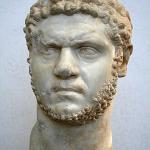
Caracalla, born Lucius Septimius Bassianus on April 4, 188 CE, in Lugdunum (modern-day Lyon, France), was the elder son of Emperor Septimius Severus and Julia Domna. His nickname "Caracalla" derived from the Gallic hooded tunic he popularized. He was elevated to co-emperor alongside his father in 198 CE and later ruled jointly with his younger brother Geta until he had Geta murdered in 211 CE. His reign was marked by military campaigns, financial strain, and widespread executions of perceived enemies. Caracalla was assassinated on April 8, 217 CE, near Carrhae (modern-day Turkey) by a soldier instigated by his praetorian prefect, Macrinus, who succeeded him as emperor.
Historical Context
Caracalla ruled during the Severan Dynasty, a period of significant political and military upheaval in the Roman Empire. The empire was grappling with external threats from Germanic tribes and the Parthian Empire, as well as internal instability. His reign is often seen as a transition toward the Crisis of the Third Century, a period of near-collapse for the empire. Caracalla’s most notable policy, the Antonine Constitution (212 CE), granted Roman citizenship to all free inhabitants of the empire, a move that had profound legal, social, and economic implications. His rule was also characterized by heavy taxation and lavish spending, particularly on military campaigns and public works like the Baths of Caracalla in Rome.
Beliefs
Caracalla was deeply influenced by the cult of Alexander the Great, whom he sought to emulate in both military conquest and personal demeanor. He adopted the name "Marcus Aurelius Antoninus" to associate himself with the revered Antonine emperors, particularly Marcus Aurelius. His religious beliefs were syncretic, blending Roman, Egyptian, and Eastern traditions. He showed particular devotion to the Egyptian god Serapis and the Roman god Mars. His policies and actions reflected a belief in the absolute power of the emperor and a willingness to use violence to maintain control.
Key Achievements
- Antonine Constitution (212 CE): Granted Roman citizenship to all free inhabitants of the empire, expanding the tax base and unifying legal standards across the provinces.
- Military Campaigns: Led successful campaigns against the Alamanni and the Parthians, securing the empire’s borders and expanding its influence in the East.
- Baths of Caracalla: Commissioned one of the largest and most impressive public bath complexes in Rome, which became a symbol of Roman engineering and luxury.
- Monetary Reform: Introduced the antoninianus, a new silver coin that temporarily stabilized the Roman economy.
- Infrastructure Projects: Oversaw the construction and repair of roads, aqueducts, and other public works throughout the empire, improving trade and communication.
- Cultural Syncretism: Promoted the blending of Roman and Eastern religious and cultural practices, fostering a more cosmopolitan empire.