Links
Life events
Wikipedia ↗
Wikipedia ↗
Wikipedia ↗
Wikipedia ↗
Wikipedia ↗
Wikipedia ↗
Wikipedia ↗
Wikipedia ↗
Wikipedia ↗
Article
Life Summary
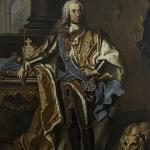
Charles VII, born Charles Albert on August 6, 1697, was the Prince-Elector of Bavaria from 1726 and later the Holy Roman Emperor from 1742 until his death in 1745. He was the son of Maximilian II Emanuel, Elector of Bavaria, and Theresa Kunegunda Sobieska, daughter of King John III Sobieski of Poland. Charles Albert was educated in the arts and military strategy, preparing him for his future roles in governance and warfare.
In 1726, he succeeded his father as Elector of Bavaria. His ambitions extended beyond Bavaria, and he sought to challenge the Habsburg dominance in Central Europe. In 1740, upon the death of Emperor Charles VI, Charles Albert laid claim to the Habsburg territories, citing the Pragmatic Sanction of 1713, which he argued did not apply to him. This claim led to the War of the Austrian Succession, where he allied with France and Prussia against Austria.
In 1742, Charles Albert was elected Holy Roman Emperor as Charles VII, ending nearly three centuries of uninterrupted Habsburg rule over the imperial title. However, his reign was short-lived and tumultuous. Austrian forces occupied Bavaria, forcing him into exile for much of his imperial tenure. He returned to Munich in 1744 but died shortly after on January 20, 1745, leaving his son Maximilian III Joseph to succeed him as Elector of Bavaria.
Historical Context
Charles VII’s reign occurred during a period of significant upheaval in Europe, marked by the War of the Austrian Succession (1740–1748). This conflict arose from the contested succession of Maria Theresa to the Habsburg throne, following the death of her father, Emperor Charles VI. The Pragmatic Sanction of 1713, which Charles VI had secured to ensure Maria Theresa’s inheritance, was challenged by several European powers, including Bavaria, Prussia, and France.
Charles Albert’s election as Holy Roman Emperor in 1742 was a rare break in the Habsburg dynasty’s hold on the imperial title, which had lasted since 1438. His reign symbolized the shifting power dynamics in Europe, as traditional alliances were upended and new rivalries emerged. However, his inability to secure Bavaria or assert his authority effectively limited his impact. The war ultimately ended with the Treaty of Aix-la-Chapelle in 1748, which confirmed Maria Theresa’s succession and restored the Habsburgs to the imperial throne with the election of her husband, Francis I.
Charles VII’s brief reign highlighted the fragility of the Holy Roman Empire’s electoral system and the challenges of maintaining authority in a decentralized political structure. His ambitions also reflected the broader struggles of smaller German states to assert independence from Habsburg dominance.
Beliefs
Charles VII was a devout Catholic, as was typical of European rulers of his time. His political and military strategies were heavily influenced by his desire to expand Bavarian power and challenge Habsburg authority. He believed in the legitimacy of his claim to the Habsburg territories and the imperial title, despite the Pragmatic Sanction. His alliance with France and Prussia was driven by a shared opposition to Habsburg hegemony, reflecting a pragmatic approach to diplomacy and warfare.
Key Achievements
- Election as Holy Roman Emperor (1742): Became the first non-Habsburg emperor in nearly 300 years, breaking the dynasty’s long-standing hold on the title.
- Alliance with France and Prussia: Formed a coalition that challenged Habsburg power during the War of the Austrian Succession, reshaping European alliances.
- Military Campaigns: Led Bavarian and allied forces in the early stages of the War of the Austrian Succession, though with limited success.
- Diplomatic Efforts: Sought to legitimize his claim to the Habsburg territories through negotiations and military action, though ultimately unsuccessful.
- Cultural Patronage: Supported the arts and architecture in Bavaria, contributing to the cultural development of his electorate.
- Temporary Occupation of Prague (1741): Captured the city during the war, briefly asserting his authority in Bohemia.
- Restoration of Bavarian Sovereignty (1744): Reclaimed Munich and parts of Bavaria after Austrian occupation, though his reign remained unstable.