Links
Life events
Wikipedia ↗
Wikipedia ↗
Wikipedia ↗
Wikipedia ↗
Wikipedia ↗
Wikipedia ↗
Wikipedia ↗
Wikipedia ↗
Article
Life Summary
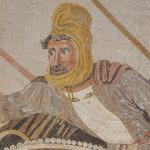
Darius III, originally named Codomannus, was born around 380 BCE to a cadet branch of the Achaemenid royal family. Before ascending the throne, he served as a satrap (governor) and distinguished himself in battle. He became king in 336 BCE after the assassination of Artaxerxes IV, inheriting an empire weakened by court intrigues and regional rebellions. His reign was dominated by the invasion of Alexander the Great, beginning in 334 BCE. Despite initial resistance, Darius suffered decisive defeats at the battles of Issus (333 BCE) and Gaugamela (331 BCE). Fleeing eastward, he was betrayed and murdered by his own satrap Bessus in 330 BCE, effectively ending the Achaemenid dynasty.
Historical Context
Darius III ruled during the twilight of the Achaemenid Empire, the first Persian Empire, which stretched from the Balkans to the Indus Valley at its height. The empire was a vast, multicultural state with a sophisticated administrative system, but by Darius’s time, it was plagued by internal decay, corruption, and regional autonomy. His reign coincided with the rise of Macedon under Philip II and, later, Alexander the Great, whose military genius and ambition reshaped the ancient world. Darius’s defeat symbolized the end of Persian hegemony in the Near East and the beginning of Hellenistic influence across the region. His struggles against Alexander also highlighted the vulnerabilities of large, decentralized empires when faced with a unified, aggressive adversary.
Beliefs
Darius III adhered to Zoroastrianism, the dominant religion of the Achaemenid Empire, which emphasized the duality of good and evil, the importance of truth, and the worship of Ahura Mazda. As king, he likely saw himself as the divinely appointed ruler, a common belief among Persian monarchs, tasked with maintaining order and justice. His reign, however, was marked by crisis, and his inability to unify the empire’s resources against Alexander may reflect a weakening of the traditional Persian worldview or a failure to adapt to new military and political challenges.
Key Achievements
- Ascension to the Throne: Became king in 336 BCE, restoring stability after the assassination of Artaxerxes IV and the brief, chaotic reign of Artaxerxes V (Bessus).
- Initial Reforms: Attempted to centralize power and address corruption within the empire, though with limited success.
- Resistance Against Alexander: Organized and led Persian forces in major battles against Alexander the Great, including Issus and Gaugamela, demonstrating personal bravery and tactical awareness.
- Mobilization of Resources: Assembled one of the largest armies in ancient history for the Battle of Gaugamela, showcasing the empire’s vast manpower and resources.
- Cultural Legacy: Despite his defeat, Darius III’s reign marked the end of an era that had profoundly influenced the political and cultural landscape of the ancient Near East, leaving a legacy that persisted in later Persian dynasties.