Links
Life events
Wikipedia ↗
Wikipedia ↗
Wikipedia ↗
Wikipedia ↗
Wikipedia ↗
Wikipedia ↗
Wikipedia ↗
Wikipedia ↗
Wikipedia ↗
Article
Life Summary
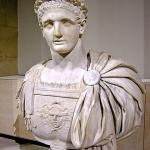
Domitian, born Titus Flavius Domitianus on October 24, 51 CE, was the younger son of Vespasian and the brother of Titus. He grew up in Rome during a period of political turmoil, including the Year of the Four Emperors (69 CE). Unlike his brother, Domitian had little military or administrative experience before ascending to the throne. He became emperor in 81 CE after Titus's sudden death and ruled until his assassination on September 18, 96 CE. Domitian's reign was marked by financial reforms, extensive building projects, and a strict, often repressive, governance style. He was assassinated in a palace conspiracy involving court officials and his wife, Domitia Longina.
Historical Context
Domitian ruled during the Flavian dynasty, a period of relative stability following the chaotic Year of the Four Emperors. The Roman Empire was at its territorial peak, but internal tensions simmered, particularly between the emperor and the Senate. Domitian's authoritarian rule and distrust of the aristocracy led to widespread purges and executions. His reign also saw the continuation of Roman expansion, particularly in Britain and Germania, as well as efforts to strengthen the empire's borders. Domitian's persecution of religious minorities, including Christians and Jews, set a precedent for later imperial policies. His assassination marked the end of the Flavian dynasty and the beginning of the era of the Five Good Emperors.
Beliefs
Domitian was a traditionalist who emphasized the restoration of Roman religious and cultural practices. He saw himself as a restorer of Rome's moral and religious values, often invoking the gods in his policies. He was particularly devoted to Minerva, whom he considered his patron goddess, and built temples in her honor. Domitian also believed in the divine nature of the emperor, adopting the title "Dominus et Deus" (Lord and God), which alienated the Senate and the traditional Roman elite. His religious policies were intertwined with his political control, using religion to legitimize his authoritarian rule.
Key Achievements
- Financial Reforms: Domitian revalued the Roman currency, increasing the silver content of the denarius, which stabilized the economy after years of inflation.
- Building Projects: He completed the construction of the Flavian Amphitheatre (Colosseum) and built the Arch of Titus, as well as numerous temples, roads, and public buildings across the empire.
- Military Campaigns: Domitian strengthened Rome's northern borders, particularly in Germania and Britain, through military campaigns and the construction of fortifications like the Limes Germanicus.
- Administrative Reforms: He improved the efficiency of the imperial bureaucracy, reducing corruption and ensuring better governance in the provinces.
- Persecution of Religious Minorities: Domitian intensified the persecution of Christians and Jews, enforcing the collection of the Jewish tax and targeting those who refused to conform to Roman religious practices.
- Cultural Patronage: He promoted Roman literature and arts, supporting poets like Martial and Statius, and organized public games and festivals to entertain the populace.