Links
Life events
Wikipedia ↗
Wikipedia ↗
Wikipedia ↗
Wikipedia ↗
Wikipedia ↗
Wikipedia ↗
Wikipedia ↗
Wikipedia ↗
Wikipedia ↗
Wikipedia ↗
Article
Life Summary
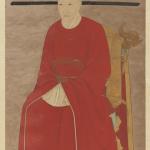
Emperor Gaozong of Song, born Zhao Gou on November 12, 1107, was the tenth emperor of the Song Dynasty and the first of the Southern Song Dynasty. He was the ninth son of Emperor Huizong and a younger brother of Emperor Qinzong. His early life was marked by the tumultuous period of the Northern Song Dynasty's decline. In 1127, the Jin Dynasty invaded the Song capital of Kaifeng, capturing Emperor Huizong and Emperor Qinzong in an event known as the Jingkang Incident. Zhao Gou escaped capture and, with the support of loyal officials and generals, established the Southern Song Dynasty in Lin'an (modern-day Hangzhou) later that year, proclaiming himself emperor.
Gaozong's reign was dominated by military conflicts with the Jin Dynasty and internal political struggles. He initially sought to recover the lost northern territories but later adopted a more defensive stance, focusing on consolidating power in the south. His reign saw the rise of prominent generals like Yue Fei and Han Shizhong, who led resistance efforts against the Jin. However, political intrigue and factionalism at court, particularly involving the chancellor Qin Hui, led to the execution of Yue Fei in 1142, a controversial decision that has been debated by historians.
Gaozong abdicated the throne in 1162 in favor of his adopted son, Zhao Shen (Emperor Xiaozong), citing poor health and the desire to retire. He lived out his remaining years as the Retired Emperor, dying on November 9, 1187, at the age of 79.
Historical Context
Emperor Gaozong's reign occurred during a pivotal period in Chinese history, marked by the transition from the Northern Song to the Southern Song Dynasty. The fall of the Northern Song capital to the Jin Dynasty in 1127 was a catastrophic event that forced the Song court to relocate south of the Yangtze River, leading to the establishment of the Southern Song Dynasty. This period was characterized by a shift in China's political and cultural center of gravity from the north to the south, as well as ongoing military conflicts with the Jin Dynasty in the north.
Gaozong's reign was also a time of significant cultural and economic development in southern China. The Southern Song Dynasty saw advancements in technology, commerce, and the arts, with the capital Lin'an becoming one of the most prosperous cities in the world. However, the dynasty's inability to recover the lost northern territories remained a source of national humiliation and a central theme in the historical narrative of the period.
Gaozong's decision to sue for peace with the Jin Dynasty in 1142, despite the military successes of generals like Yue Fei, reflected the complex political realities of the time. The treaty, known as the Treaty of Shaoxing, established the Huai River as the boundary between the two states and required the Song to pay annual tribute to the Jin. This decision, while ensuring a period of relative stability, was controversial and has been criticized by later historians.
Beliefs
Emperor Gaozong was a follower of Confucianism, which heavily influenced his governance and personal beliefs. He valued the Confucian ideals of harmony, loyalty, and filial piety, though his reign was often marked by political intrigue that contradicted these principles. Gaozong also patronized Buddhism and Daoism, reflecting the religious syncretism common in Chinese imperial courts. His belief in the Mandate of Heaven—a traditional Chinese philosophical concept concerning the legitimacy of rulers—shaped his decisions, particularly his eventual abdication in favor of a successor he believed would better uphold the dynasty's fortunes.
Key Achievements
- Establishment of the Southern Song Dynasty: Gaozong re-established the Song Dynasty in southern China after the fall of the Northern Song, ensuring the survival of the dynasty for another 150 years.
- Relocation of the Capital to Lin'an: He moved the capital to Lin'an (modern-day Hangzhou), which became a thriving cultural and economic center during his reign.
- Economic and Cultural Flourishing: Oversaw a period of economic growth and cultural development in southern China, including advancements in agriculture, trade, and the arts.
- Military Reforms and Defense: Strengthened the Southern Song military and fortifications, enabling the dynasty to resist further Jin invasions and maintain stability in the south.
- Patronage of the Arts and Scholarship: Gaozong was a patron of literature, calligraphy, and painting, contributing to the cultural legacy of the Southern Song Dynasty. He was also an accomplished calligrapher himself.
- Diplomatic Negotiations with the Jin: Despite criticism, his diplomatic efforts led to the Treaty of Shaoxing in 1142, which brought a temporary peace and allowed the Southern Song to focus on internal development.
- Promotion of Confucian Scholarship: Encouraged the study and application of Confucian principles in governance, reinforcing the civil service examination system and the role of scholar-officials in the administration.
- Abdication and Retirement: His voluntary abdication in 1162 set a precedent for peaceful succession in the Southern Song Dynasty, ensuring a smooth transition of power to Emperor Xiaozong.