Links
Life events
Wikipedia ↗
Wikipedia ↗
Wikipedia ↗
Wikipedia ↗
Wikipedia ↗
Wikipedia ↗
Wikipedia ↗
Wikipedia ↗
Wikipedia ↗
Wikipedia ↗
Article
Life Summary
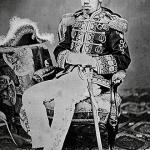
Emperor Meiji, born Mutsuhito on November 3, 1852, was the 122nd Emperor of Japan according to the traditional order of succession. He ascended to the throne on February 3, 1867, at the age of 14, following the death of his father, Emperor Kōmei. His reign marked the beginning of the Meiji era, a period of rapid modernization and westernization in Japan. Meiji's early life was spent in the confines of the imperial court in Kyoto, where he received a traditional education. However, the political landscape of Japan was undergoing significant changes, with growing pressure to end the feudal Tokugawa shogunate and restore imperial rule. The Meiji Restoration of 1868, which he symbolically led, abolished the shogunate and established a new government with the emperor at its center. Meiji moved the imperial capital from Kyoto to Tokyo in 1869, signaling a break from the past. Throughout his reign, he played a largely ceremonial role but was a unifying figure for the nation. He married Empress Shōken in 1869, and together they had several children, including his successor, Emperor Taishō. Emperor Meiji died on July 30, 1912, at the age of 59, leaving behind a transformed Japan that had emerged as a global power.
Historical Context
The Meiji era (1868–1912) was a pivotal period in Japanese history, characterized by the country's rapid transformation from a feudal society into a modern industrialized nation. Prior to the Meiji Restoration, Japan had been isolated from the rest of the world for over 200 years under the Tokugawa shogunate's policy of sakoku. However, pressure from Western powers, particularly the United States, forced Japan to open its ports to foreign trade in the mid-19th century. This exposure to Western technology and ideas sparked a movement among young samurai and reformers to overthrow the shogunate and restore imperial rule. Emperor Meiji became the symbolic leader of this movement, which aimed to strengthen Japan against foreign domination. The new Meiji government implemented sweeping reforms, including the abolition of the feudal system, the establishment of a centralized government, the creation of a modern military, and the adoption of Western technology and institutions. These changes laid the foundation for Japan's emergence as a major world power by the early 20th century. Emperor Meiji's reign thus represents a critical turning point in Japanese history, marking the country's transition into the modern era.
Beliefs
Emperor Meiji was a figurehead who embodied the spiritual and cultural values of Japan, though his personal beliefs were not widely documented. He was raised in the Shinto tradition, which emphasized the divine origins of the imperial line. The Meiji government promoted State Shinto as a unifying national ideology, reinforcing the emperor's status as a living deity (akitsumikami). While Meiji himself was not overtly political, his reign saw the fusion of Shinto and nationalism, which played a key role in Japan's modernization and imperial expansion. The emperor's public persona was carefully cultivated to inspire loyalty and patriotism among the Japanese people.
Key Achievements
- Meiji Restoration (1868): Symbolically led the overthrow of the Tokugawa shogunate and restored imperial rule, ending over 250 years of feudal governance.
- Modernization of Japan: Oversaw the rapid industrialization and westernization of Japan, transforming it from a feudal society into a modern nation-state.
- Abolition of the Feudal System: Dissolved the samurai class and established a centralized government with a modern constitution (1889).
- Military Reforms: Created a conscripted national army and navy, modeled after Western military systems, which later enabled Japan's imperial expansion.
- Economic Development: Promoted infrastructure projects, such as railways and telegraph lines, and encouraged industrial growth, leading to Japan's emergence as an economic power.
- Education Reforms: Established a national education system based on Western models, increasing literacy and technical skills among the population.
- Diplomatic Engagement: Ended Japan's isolation by signing treaties with Western powers and establishing diplomatic relations, positioning Japan as a global player.
- Relocation of the Capital: Moved the imperial capital from Kyoto to Tokyo in 1869, symbolizing the nation's shift toward modernity.