Links
Life events
Wikipedia ↗
Wikipedia ↗
Wikipedia ↗
Wikipedia ↗
Wikipedia ↗
Wikipedia ↗
Wikipedia ↗
Article
Life Summary
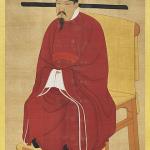
Emperor Shenzong of Song, born Zhao Xu on January 25, 1048, was the seventh emperor of the Song Dynasty in China. He ascended the throne in 1067 at the age of 19 following the death of his father, Emperor Yingzong. Shenzong’s reign is notable for his ambitious reforms aimed at addressing financial and administrative inefficiencies in the empire. He appointed the reformist statesman Wang Anshi as his chief councilor, who implemented sweeping changes known as the New Policies (Xinfa). These reforms included measures to stabilize grain prices, provide low-interest loans to farmers, and restructure the military and taxation systems. However, the reforms faced strong opposition from conservative factions at court, leading to political strife. Shenzong’s health declined in his later years, and he died on April 1, 1085, at the age of 37. He was succeeded by his son, Emperor Zhezong.
Historical Context
Emperor Shenzong ruled during the Northern Song Dynasty, a period marked by both cultural flourishing and significant administrative challenges. The Song Dynasty was a time of economic growth, technological innovation, and intellectual advancement, but it also faced external threats from northern nomadic tribes, particularly the Liao and Western Xia. Internally, the empire struggled with fiscal deficits, bureaucratic inefficiency, and social inequality. Shenzong’s reign is often seen as a pivotal moment in Song history, as his reforms sought to address these issues and strengthen the central government. His support for Wang Anshi’s policies reflected a desire to modernize the state, though the reforms ultimately proved divisive and were partially rolled back after his death. Shenzong’s rule is a key example of the tensions between reform and tradition in Chinese governance.
Beliefs
Emperor Shenzong was a Confucian ruler who believed in the importance of strong, centralized governance to ensure the welfare of his people. He was influenced by the ideas of Wang Anshi, who argued that the state had a duty to intervene in the economy to alleviate poverty and reduce inequality. Shenzong’s support for the New Policies demonstrated his belief in proactive governance and his willingness to challenge entrenched interests to achieve his goals. However, his reign also revealed the limitations of reform in the face of conservative opposition, highlighting the complexities of implementing change in a deeply traditional society.
Key Achievements
- Implementation of the New Policies (Xinfa): Under Shenzong’s patronage, Wang Anshi introduced sweeping reforms to address fiscal and administrative issues, including the Green Sprouts Act (providing low-interest loans to farmers) and the Market Exchange Act (stabilizing grain prices).
- Military Reforms: Shenzong restructured the military to improve efficiency, including the creation of local militias (baojia) to supplement the imperial army.
- Expansion of the Examination System: He expanded the imperial examination system to recruit talented officials, reinforcing meritocracy in the bureaucracy.
- Economic Stabilization: His policies aimed to reduce corruption and improve tax collection, though their long-term success was limited by political opposition.
- Cultural Patronage: Shenzong supported the arts and scholarship, contributing to the cultural flourishing of the Song Dynasty.
- Diplomatic Efforts: He sought to strengthen Song’s position against northern threats, though his military campaigns against the Western Xia achieved mixed results.
- Infrastructure Development: His reign saw improvements in infrastructure, including water conservancy projects to aid agriculture.