Links
Life events
Wikipedia ↗
Wikipedia ↗
Wikipedia ↗
Wikipedia ↗
Wikipedia ↗
Wikipedia ↗
Wikipedia ↗
Wikipedia ↗
Wikipedia ↗
Wikipedia ↗
Wikipedia ↗
Article
Life Summary
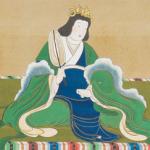
Empress Suiko (推古天皇, Suiko-tennō), born Princess Nukatabe (額田部皇女) in 554 CE, was the 33rd monarch of Japan and the first of eight women to ascend the Chrysanthemum Throne as reigning empresses. She was the daughter of Emperor Kinmei and his consort, Soga no Kitashihime, and the younger sister of Emperor Yōmei. Suiko’s early life was marked by the power struggles between the Soga and Mononobe clans, which dominated the Yamato court. After the death of her half-brother, Emperor Sushun, in 592 CE, she was enthroned at the age of 38, ruling jointly with her nephew, Prince Shōtoku, who served as regent and de facto ruler.
Suiko’s reign lasted 35 years, from 593 CE until her death in 628 CE. She is remembered for her role in consolidating the Yamato state, promoting Buddhism as a unifying force, and fostering diplomatic and cultural exchanges with China and the Korean kingdoms. Her court was a center of learning and religious reform, with Prince Shōtoku playing a pivotal role in shaping Japan’s early political and religious institutions. Suiko died at the age of 74 and was buried in the Shinaga no Yamada no Misasagi tomb in Osaka.
Historical Context
Empress Suiko’s reign occurred during the Asuka period (538–710 CE), a transformative era in Japanese history marked by the introduction of Buddhism, the adoption of Chinese-style governance, and the consolidation of the Yamato state. The period was characterized by intense clan rivalries, particularly between the Soga clan, which supported Buddhism and closer ties with China, and the Mononobe clan, which favored traditional Shinto practices and resisted foreign influence. Suiko’s ascension to the throne followed the assassination of Emperor Sushun by Soga no Umako, a powerful statesman who sought to strengthen the Soga clan’s dominance.
Suiko’s reign was pivotal in Japan’s cultural and political development. The adoption of Buddhism, which had been introduced in 538 CE, gained momentum under her rule, with Prince Shōtoku establishing Buddhist temples and promoting the religion as a tool for state-building. The Seventeen-Article Constitution, attributed to Prince Shōtoku, was promulgated in 604 CE and reflected Confucian and Buddhist principles, emphasizing harmony, loyalty, and ethical governance. Suiko’s court also sent envoys to China’s Sui Dynasty, fostering diplomatic relations and facilitating the transmission of Chinese culture, technology, and political ideas to Japan. Her reign laid the foundation for the Taika Reforms of 645 CE, which further centralized and bureaucratized the Japanese state.
Beliefs
Empress Suiko was a devout Buddhist and played a crucial role in promoting the religion as a unifying force in Japan. She supported the construction of Buddhist temples, including the famous Hōryū-ji in Nara, which became a center of Buddhist learning and art. Suiko’s belief in Buddhism was intertwined with her political vision, as she saw the religion as a means to strengthen the authority of the Yamato court and foster social cohesion. While Shinto remained the indigenous religion of Japan, Suiko’s patronage of Buddhism marked a shift toward a syncretic religious landscape that blended Buddhist and Shinto practices.
Key Achievements
- First Reigning Empress: Became the first woman to ascend the Chrysanthemum Throne as a reigning empress, setting a precedent for future female rulers in Japan.
- Promotion of Buddhism: Supported the spread of Buddhism in Japan, overseeing the construction of temples and the establishment of Buddhist institutions, including Hōryū-ji, one of Japan’s oldest wooden structures.
- Diplomatic Relations with China: Sent envoys to China’s Sui Dynasty, fostering cultural and political exchanges that facilitated the transmission of Chinese governance, writing, and technology to Japan.
- Seventeen-Article Constitution: Collaborated with Prince Shōtoku to promulgate the Seventeen-Article Constitution in 604 CE, Japan’s first written code of ethical and political principles, which emphasized harmony, loyalty, and Confucian values.
- Centralization of Power: Strengthened the authority of the Yamato court by consolidating power under the imperial family and the Soga clan, reducing the influence of rival clans like the Mononobe.
- Cultural Exchange with Korea: Maintained diplomatic and cultural ties with the Korean kingdoms of Baekje and Silla, facilitating the exchange of art, religion, and technology.
- Patronage of the Arts: Encouraged the development of Buddhist art and architecture, leaving a lasting legacy in Japan’s cultural heritage.
- Long and Stable Reign: Ruled for 35 years, providing stability and continuity during a period of significant political and cultural transformation.