Links
Life events
Wikipedia ↗
Wikipedia ↗
Wikipedia ↗
Wikipedia ↗
Wikipedia ↗
Wikipedia ↗
Wikipedia ↗
Wikipedia ↗
Article
Life Summary
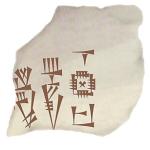
Enmebaragesi (also spelled En-me-barage-si or Me-barasi) was a king of the Sumerian city-state of Kish, ruling during the Early Dynastic I period of Mesopotamia, approximately in the 26th century BCE. He is one of the earliest rulers mentioned in historical records, specifically in the Sumerian King List, which attributes a reign of 900 years to him—a figure likely symbolic rather than literal. Enmebaragesi is also referenced in the Epic of Gilgamesh, where he is described as the father of Agga, another king of Kish, and as a contemporary of Gilgamesh of Uruk. His existence is corroborated by archaeological evidence, including an inscription on a vase fragment discovered at Nippur, which confirms his historical reality. Little is known about his early life, but his reign marked a period of significant influence for Kish in southern Mesopotamia. He is believed to have died in Kish, though the exact circumstances of his death remain unknown.
Historical Context
Enmebaragesi ruled during a formative era in Mesopotamian history, a time when city-states like Kish, Uruk, and Ur were emerging as dominant political and cultural centers. This period, known as the Early Dynastic I-II period (circa 2900–2350 BCE), was characterized by the development of writing (cuneiform), the construction of monumental architecture (such as ziggurats), and the rise of complex societies with hierarchical social structures. Kish, located in northern Sumer, was one of the most powerful city-states during this time, often competing with Uruk for dominance. Enmebaragesi’s reign is significant because it represents one of the earliest attempts to consolidate power in Mesopotamia, setting the stage for later dynasties and empires. His mention in both the Sumerian King List and the Epic of Gilgamesh underscores his importance in the collective memory of ancient Mesopotamia, bridging myth and history.
Beliefs
As a ruler of Kish, Enmebaragesi would have adhered to the religious and cultural traditions of Sumer. The Sumerians worshipped a pantheon of gods, with each city-state often associating itself with a patron deity. Kish was linked to the god Zababa, a warrior deity, which may have influenced Enmebaragesi’s military campaigns. The Sumerians believed in divine kingship, where rulers were seen as intermediaries between the gods and the people. Enmebaragesi’s long reign, as recorded in the Sumerian King List, reflects the Sumerian belief in the semi-divine status of kings, where their rule was often mythologized to emphasize their power and legitimacy. His achievements, such as the construction of temples or military victories, would have been framed as divinely sanctioned.
Key Achievements
- Historical Validation: Enmebaragesi is one of the earliest Mesopotamian rulers confirmed by archaeological evidence, including an inscription on a vase fragment from Nippur, which mentions his name and title.
- Military Leadership: He is credited with military victories, including the capture of weapons from Elam, as recorded in the Sumerian King List. This suggests his role in expanding Kish’s influence in the region.
- Dynastic Legacy: Enmebaragesi established a dynasty in Kish, with his son Agga succeeding him as king. This dynastic continuity helped solidify Kish’s power in early Mesopotamian politics.
- Cultural Influence: His reign is mentioned in the Epic of Gilgamesh, one of the oldest known works of literature, indicating his lasting impact on Sumerian cultural memory.
- Political Dominance: Enmebaragesi’s rule marked a period of Kish’s prominence in southern Mesopotamia, setting the stage for future city-state rivalries and the eventual rise of empires like Akkad.