Links
Life events
Wikipedia ↗
Wikipedia ↗
Wikipedia ↗
Wikipedia ↗
Wikipedia ↗
Wikipedia ↗
Wikipedia ↗
Wikipedia ↗
Wikipedia ↗
Article
Life Summary
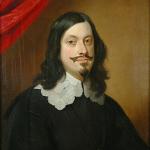
Ferdinand III was born on July 13, 1608, in Graz, Austria, as the third son of Emperor Ferdinand II and Maria Anna of Bavaria. Educated by the Jesuits, he was groomed for leadership from an early age. He became King of Hungary in 1625 and King of Bohemia in 1627, solidifying Habsburg control over these regions. Upon his father’s death in 1637, Ferdinand III ascended to the throne as Holy Roman Emperor during the tumultuous Thirty Years' War (1618–1648).
His reign was marked by military setbacks, including defeats at the hands of Swedish forces, which forced him to negotiate peace. Ferdinand III played a pivotal role in the Peace of Westphalia (1648), which ended the war and reshaped Europe’s political and religious landscape. Unlike his father, he adopted a more pragmatic approach, prioritizing the stability of the empire over rigid Counter-Reformation policies. He died on April 2, 1657, in Vienna, leaving behind a legacy of compromise and consolidation.
Historical Context
Ferdinand III ruled during one of Europe’s most destructive conflicts, the Thirty Years' War, which devastated the Holy Roman Empire and redrew the continent’s power dynamics. The war began as a religious struggle between Protestants and Catholics but evolved into a broader geopolitical conflict involving major European powers like Spain, France, and Sweden. Ferdinand III inherited an empire weakened by war, economic collapse, and internal divisions.
His leadership was crucial in transitioning the empire from a fragmented collection of states into a more centralized entity. The Peace of Westphalia, which he helped broker, established the principle of state sovereignty and religious tolerance, marking the decline of papal and imperial authority in favor of nation-states. Ferdinand III’s reign also saw the rise of Austria as a dominant power within the empire, setting the stage for the Habsburgs' future influence in European politics.
Beliefs
Ferdinand III was a devout Catholic, raised in the Jesuit tradition, but his beliefs were tempered by political pragmatism. Unlike his father, Ferdinand II, who pursued aggressive Counter-Reformation policies, Ferdinand III recognized the need for compromise to preserve the empire. He supported the Catholic Church but also accepted the religious settlements of the Peace of Westphalia, which granted limited rights to Protestants. His approach reflected a shift toward secular governance, where state stability took precedence over religious uniformity.
Key Achievements
- Peace of Westphalia (1648): Played a central role in negotiating the treaties that ended the Thirty Years' War, establishing modern principles of state sovereignty and religious tolerance.
- Centralization of Imperial Authority: Strengthened the Habsburg monarchy by consolidating power over the empire’s fragmented states, reducing the influence of regional princes.
- Military Reforms: Reorganized the imperial army, improving its efficiency and laying the groundwork for Austria’s future military successes.
- Religious Compromise: Adopted a more moderate stance on religious issues, allowing for greater Protestant rights and reducing internal conflicts within the empire.
- Cultural Patronage: Promoted the arts and sciences, supporting composers like Johann Jakob Froberger and fostering the Baroque cultural renaissance in Vienna.
- Diplomatic Leadership: Maintained alliances with key European powers, including Spain and Poland, to stabilize the empire’s position in Europe.
- Economic Recovery: Initiated policies to rebuild the empire’s economy after the devastation of the Thirty Years' War, including trade reforms and infrastructure projects.