Links
Life events
Wikipedia ↗
Wikipedia ↗
Wikipedia ↗
Wikipedia ↗
Wikipedia ↗
Wikipedia ↗
Wikipedia ↗
Article
Life Summary
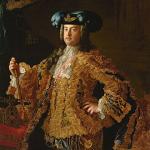
Francis Stephen of Lorraine was born on December 8, 1708, in Nancy, Duchy of Lorraine (now France). He was the eldest surviving son of Leopold, Duke of Lorraine, and Élisabeth Charlotte d'Orléans. Educated in Vienna under the guidance of his future father-in-law, Emperor Charles VI, Francis was groomed for a prominent role in European politics. In 1736, he married Maria Theresa, the heiress to the Habsburg dominions, securing a pivotal alliance for the Habsburg dynasty. Despite initial resistance from European powers, Francis renounced his claim to Lorraine in favor of France, receiving the Grand Duchy of Tuscany as compensation.
Francis’s political career was closely tied to his wife’s reign. When Maria Theresa inherited the Habsburg lands in 1740, she faced the War of the Austrian Succession, during which Francis played a supportive but secondary role. In 1745, he was elected Holy Roman Emperor as Francis I, a title that carried significant prestige but limited real power. His reign was marked by cooperation with Maria Theresa, who effectively governed the Habsburg territories. Francis focused on economic reforms, particularly in the Habsburg Netherlands and Tuscany, promoting trade and infrastructure development. He died suddenly on August 18, 1765, in Innsbruck, Austria, leaving behind a legacy of dynastic consolidation and economic modernization.
Historical Context
Francis I ruled during a transformative period in European history, characterized by the decline of the Holy Roman Empire as a centralized power and the rise of absolutist monarchies. The War of the Austrian Succession (1740–1748) and the Seven Years' War (1756–1763) reshaped the continent’s political landscape, with Prussia emerging as a major power under Frederick the Great. The Habsburgs, under Maria Theresa, sought to modernize their administration and military to compete with these rising threats. Francis’s election as Holy Roman Emperor symbolized the Habsburgs' enduring influence, even as the empire’s authority waned.
His marriage to Maria Theresa was a strategic masterstroke, ensuring the survival of the Habsburg dynasty through the Pragmatic Sanction. While Francis’s role was often overshadowed by his wife’s strong leadership, his contributions to economic policy and dynastic stability were crucial. The Habsburg-Lorraine dynasty he co-founded would go on to rule Austria until the end of World War I, leaving a lasting impact on European history.
Beliefs
Francis I was a pragmatic ruler who prioritized the stability and prosperity of the Habsburg lands. He believed in the importance of economic development, advocating for trade, infrastructure, and financial reforms. Unlike his wife, who was deeply religious, Francis was more secular in his outlook, focusing on practical governance rather than ideological or theological concerns. His policies reflected a belief in enlightened absolutism, where the ruler’s authority was used to improve the lives of subjects through modernization and efficient administration.
Key Achievements
- Dynastic Alliance: Married Maria Theresa in 1736, securing the Habsburg succession and founding the Habsburg-Lorraine dynasty.
- Holy Roman Emperor: Elected in 1745, restoring the imperial title to the Habsburgs after a brief interruption.
- Economic Reforms: Promoted trade and infrastructure development, particularly in the Habsburg Netherlands and Tuscany.
- Military Support: Assisted Maria Theresa during the War of the Austrian Succession, helping to defend Habsburg territories against Prussian and Bavarian aggression.
- Diplomatic Success: Negotiated the Treaty of Füssen (1745), which secured Bavaria’s recognition of Maria Theresa’s rule and Francis’s imperial election.
- Financial Modernization: Introduced reforms to stabilize the Habsburg economy, including the establishment of state banks and improved tax collection.
- Cultural Patronage: Supported the arts and sciences, contributing to the cultural flourishing of Vienna during his reign.
- Legacy of Stability: Ensured the continuity of Habsburg rule, laying the groundwork for the dynasty’s dominance in Central Europe until the 20th century.