Links
Life events
Wikipedia ↗
Wikipedia ↗
Wikipedia ↗
Wikipedia ↗
Wikipedia ↗
Wikipedia ↗
Wikipedia ↗
Wikipedia ↗
Wikipedia ↗
Wikipedia ↗
Article
Life Summary
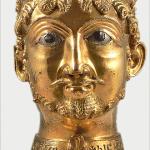
Frederick I, known as Frederick Barbarossa ("Red Beard"), was born around 1122, likely in Waiblingen, Swabia. He was the son of Duke Frederick II of Swabia and Judith of Bavaria, making him a member of the Hohenstaufen dynasty. His early life was marked by the tumultuous politics of the Holy Roman Empire, where rival noble families vied for power. In 1147, he inherited the Duchy of Swabia from his father and later became Duke of Alsace. His rise to prominence accelerated when his uncle, King Conrad III, died in 1152, and Frederick was elected King of Germany at Frankfurt on March 4, 1152. He was crowned in Aachen on March 9, 1152.
Frederick’s reign was defined by his efforts to consolidate imperial power, both within Germany and in Italy. He sought to reassert imperial authority over the semi-independent German princes and to restore the prestige of the Holy Roman Empire in Italy, where the papacy and the Lombard League of cities resisted his rule. His campaigns in Italy, particularly his conflicts with the Lombard cities and Pope Alexander III, became legendary. Despite initial successes, including his coronation as Holy Roman Emperor by Pope Adrian IV in 1155, his ambitions were repeatedly thwarted by the resilience of the Italian cities and the papacy.
Frederick’s personal life was marked by his marriage to Beatrice of Burgundy in 1156, which brought him the Kingdom of Burgundy and strengthened his ties to the French nobility. The couple had several children, including his successor, Henry VI. Frederick’s later years were dominated by the Third Crusade, during which he drowned in the Saleph River in Cilicia (modern-day Turkey) on June 10, 1190. His death marked the end of a reign that had sought to revive the glory of the Roman Empire but left a mixed legacy of ambition and unresolved conflict.
Historical Context
Frederick I ruled during the 12th century, a period of significant political and cultural transformation in Europe. The Holy Roman Empire, which he led, was a patchwork of semi-autonomous territories, where the emperor’s authority was often challenged by powerful princes, bishops, and cities. Frederick’s reign coincided with the height of the Investiture Controversy’s aftermath, a conflict between the papacy and secular rulers over the appointment of church officials. His efforts to assert imperial control over Italy brought him into direct conflict with the papacy, particularly Pope Alexander III, who excommunicated him in 1160.
The 12th century was also a time of economic growth and urbanization in Europe, particularly in Italy, where cities like Milan, Venice, and Florence were becoming centers of trade and culture. The Lombard League, an alliance of northern Italian cities, became a formidable opponent to Frederick’s ambitions, defeating him at the Battle of Legnano in 1176. This defeat forced Frederick to recognize the autonomy of the Lombard cities in the Peace of Venice (1177) and later in the Peace of Constance (1183).
Frederick’s reign was also shaped by the broader context of the Crusades. The fall of Jerusalem to Saladin in 1187 prompted the Third Crusade, in which Frederick played a leading role. His death during the crusade was a significant blow to the Christian forces and left a lasting impact on the Holy Roman Empire’s political landscape. Frederick’s efforts to centralize power and restore imperial authority set the stage for future conflicts between the empire and its constituent territories, as well as between the empire and the papacy.
Beliefs
Frederick I was a devout Christian who believed in the divine right of kings and the sacred nature of the Holy Roman Empire. He saw himself as the successor to the Roman emperors and sought to restore the empire’s glory, both in terms of political power and cultural prestige. His belief in the emperor’s supremacy over the papacy was a central tenet of his reign, leading to his repeated conflicts with the Church. Despite his excommunication, Frederick maintained that his authority came directly from God, not the pope, and he worked to strengthen the imperial church within his domains.
Frederick was also a patron of the arts and learning, supporting the development of Romanesque architecture and the revival of Roman law. His court was a center of chivalric culture, and he promoted the ideals of knighthood and feudal loyalty. His belief in the importance of law and order was reflected in his efforts to codify and enforce imperial laws, particularly in Italy, where he sought to impose imperial justice on the rebellious cities.
Key Achievements
- Election as King of Germany (1152): Frederick was elected King of Germany in 1152, marking the beginning of his efforts to consolidate imperial power.
- Coronation as Holy Roman Emperor (1155): Crowned by Pope Adrian IV in Rome, Frederick became the first Hohenstaufen emperor, reasserting imperial authority in Italy.
- Marriage to Beatrice of Burgundy (1156): His marriage to Beatrice brought the Kingdom of Burgundy under imperial control, expanding the empire’s territorial reach.
- Revival of Roman Law: Frederick promoted the study and application of Roman law, particularly through the University of Bologna, which strengthened imperial governance.
- Peace of Venice (1177): After years of conflict, Frederick reconciled with Pope Alexander III, ending his excommunication and restoring relations with the papacy.
- Peace of Constance (1183): This treaty granted the Lombard cities autonomy while recognizing imperial sovereignty, resolving a long-standing conflict in northern Italy.
- Leadership in the Third Crusade (1189-1190): Frederick led a massive German army on the Third Crusade, demonstrating his commitment to the Christian cause in the Holy Land.
- Dynastic Legacy: Frederick’s reign established the Hohenstaufen dynasty as a dominant force in European politics, with his son Henry VI succeeding him as emperor.