Links
Life events
Wikipedia ↗
Wikipedia ↗
Wikipedia ↗
Wikipedia ↗
Wikipedia ↗
Wikipedia ↗
Wikipedia ↗
Article
Life Summary
Gungunum was a prominent king of the ancient Sumerian city-state of Larsa, ruling from approximately 1932 BCE to 1906 BCE (middle chronology). He ascended to the throne after the death of his predecessor, Samium, and is often regarded as one of the most successful rulers of Larsa. Gungunum's reign marked a period of significant expansion and prosperity for the city-state. He is believed to have been of Amorite descent, reflecting the broader Amorite influence in Mesopotamia during this era.
Gungunum's early life is not well-documented, but his reign is notable for its military campaigns and administrative reforms. He successfully challenged the dominance of the neighboring city-state of Isin, capturing the city of Ur and other key territories. This expansion allowed Larsa to control vital trade routes and resources, bolstering its economic and political power. Gungunum also undertook extensive building projects, including the construction and restoration of temples, which reinforced his legitimacy as a ruler and his devotion to the gods.
Gungunum's death around 1906 BCE marked the end of a transformative era for Larsa. He was succeeded by his son, Abisare, who continued his policies but faced increasing challenges from rival city-states.
Historical Context
Gungunum ruled during the Isin-Larsa period (c. 2025–1763 BCE), a time of political fragmentation and competition among city-states in southern Mesopotamia following the collapse of the Ur III dynasty. This era was characterized by the rise of Amorite dynasties, which brought new cultural and political influences to the region. The city-states of Isin and Larsa emerged as the dominant powers, vying for control over key cities like Ur, Nippur, and Uruk.
Gungunum's reign was pivotal in shifting the balance of power from Isin to Larsa. His capture of Ur, a city of immense religious and economic significance, was a major blow to Isin's dominance. This period also saw the flourishing of trade, agriculture, and religious institutions, with rulers like Gungunum investing heavily in temple construction and administrative reforms to legitimize their rule. His achievements set the stage for Larsa's continued prominence until its eventual conquest by Hammurabi of Babylon in the 18th century BCE.
Beliefs
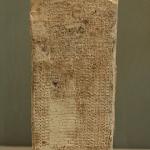
Gungunum, like other Mesopotamian rulers, adhered to the religious and cultural traditions of Sumer and Akkad. He presented himself as a pious king, devoted to the gods, particularly the moon god Nanna (Sin), who was the patron deity of Ur. His building projects, such as the restoration of temples, were not only political statements but also acts of religious devotion. Gungunum's inscriptions often invoke the gods' favor, emphasizing his role as a protector and benefactor of his people. His reign reflected the Mesopotamian belief in the divine mandate of kings, where rulers were seen as intermediaries between the gods and humanity.
Key Achievements
- Military Expansion: Successfully captured the city of Ur from Isin, significantly weakening Isin's dominance and enhancing Larsa's power.
- Economic Growth: Strengthened Larsa's economy by controlling trade routes and resources, particularly those linked to Ur.
- Building Projects: Undertook extensive construction and restoration of temples, including those dedicated to Nanna (Sin) in Ur, reinforcing his religious and political legitimacy.
- Administrative Reforms: Improved governance and administration in Larsa, ensuring stability and prosperity during his reign.
- Cultural Patronage: Promoted the arts and literature, contributing to the cultural flourishing of Larsa during his rule.
- Diplomatic Relations: Maintained and expanded diplomatic ties with neighboring city-states, securing Larsa's position as a major power in Mesopotamia.