Links
Life events
Wikipedia ↗
Wikipedia ↗
Wikipedia ↗
Wikipedia ↗
Wikipedia ↗
Wikipedia ↗
Wikipedia ↗
Wikipedia ↗
Article
Life Summary
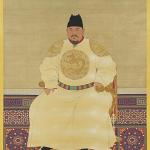
Zhu Yuanzhang was born on October 21, 1328, in a poor peasant family in present-day Fengyang, Anhui Province. Orphaned at a young age, he became a novice monk at a local Buddhist monastery to survive. In the 1350s, amid widespread peasant uprisings against the Mongol-led Yuan dynasty, Zhu joined the Red Turban Rebellion, a millenarian movement. His military prowess and leadership skills quickly elevated him through the ranks. By 1356, he had captured Nanjing, which became his base of operations. Over the next decade, Zhu defeated rival rebel leaders and the Yuan forces, culminating in the capture of Beijing in 1368. He declared himself emperor of the Ming dynasty, adopting the reign title Hongwu ("Vastly Martial").
As emperor, Hongwu centralized power, reformed the military, and implemented policies to restore agricultural productivity and Confucian governance. He established a rigid bureaucratic system, reinstated the imperial examination system, and created a network of secret police to monitor corruption. His reign was marked by both prosperity and brutality, as he purged perceived threats, including high-ranking officials and even his own chancellor, Hu Weiyong. Hongwu died on June 24, 1398, after ruling for 30 years. He was succeeded by his grandson, the Jianwen Emperor, though his fourth son, Zhu Di, later usurped the throne in the Jingnan Campaign.
Historical Context
The Hongwu Emperor’s rise to power occurred during a period of profound crisis in China. The Yuan dynasty, established by Kublai Khan, had grown increasingly unpopular due to heavy taxation, corruption, and ethnic discrimination against Han Chinese. The Black Death and natural disasters further destabilized the regime, leading to widespread peasant revolts. The Red Turban Rebellion, which Zhu Yuanzhang joined, was one of many uprisings that sought to overthrow Mongol rule and restore Han Chinese dominance.
Hongwu’s victory in 1368 marked the end of nearly a century of foreign rule and the beginning of the Ming dynasty, which would last until 1644. His reign set the foundation for China’s resurgence as a dominant power in East Asia. He revived Confucian ideals, strengthened the civil service, and expanded China’s influence through diplomacy and military campaigns. His policies aimed to prevent the concentration of power among the nobility and ensure the stability of the imperial throne. However, his authoritarian rule and frequent purges also created a climate of fear and distrust within the government.
Beliefs
Hongwu was a devout follower of Confucianism, which he saw as essential for restoring order and morality in China. He believed in the Mandate of Heaven, the idea that the emperor’s right to rule was divinely ordained but could be lost through misrule. He emphasized frugality, hard work, and loyalty to the state, often issuing edicts to promote these values. Despite his Buddhist upbringing, he later suppressed Buddhist and Taoist institutions, viewing them as corrupt and economically burdensome. He also harbored deep suspicions of intellectuals and merchants, whom he saw as potential threats to his authority.
Key Achievements
- Founded the Ming Dynasty: Overthrew the Yuan dynasty and established the Ming dynasty in 1368, restoring Han Chinese rule after nearly a century of Mongol dominance.
- Military Reforms: Created a hereditary military system known as the Weisuo (衛所), which organized soldiers into self-sustaining units, reducing the burden on the state while maintaining a large standing army.
- Agricultural Policies: Implemented the Yellow Registers and Fish Scale Registers to track land ownership and population, redistributing land to peasants and promoting agricultural productivity.
- Legal and Administrative Reforms: Compiled the Ming Code, a comprehensive legal system that influenced Chinese law for centuries. He also centralized power by abolishing the position of chancellor and personally overseeing the Six Ministries.
- Imperial Examination System: Reinstated and expanded the imperial examination system to recruit officials based on merit rather than birth, reinforcing Confucian governance.
- Economic Policies: Promoted self-sufficiency by encouraging silk and cotton production, and issued paper currency to stabilize the economy. He also banned private maritime trade to control commerce and prevent piracy.
- Construction Projects: Oversaw the reconstruction of the Great Wall, the expansion of the Grand Canal, and the building of the Forbidden City in Beijing (though the latter was completed under his son, the Yongle Emperor).
- Cultural Revival: Patronized Confucian scholars and promoted classical education, leading to a renaissance in Chinese literature, art, and philosophy during the Ming dynasty.