Links
Life events
Wikipedia ↗
Wikipedia ↗
Wikipedia ↗
Wikipedia ↗
Wikipedia ↗
Wikipedia ↗
Wikipedia ↗
Article
Life Summary
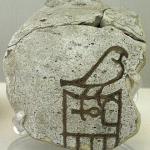
Hor-Aha, often identified with the legendary Menes, is traditionally regarded as the first pharaoh of a unified Egypt, marking the beginning of the First Dynasty. His name, "Hor-Aha," translates to "Horus the Fighter," reflecting his role as a warrior-king. According to historical records, he was the son of Narmer, the king who is credited with the initial unification of Upper and Lower Egypt. Hor-Aha’s reign is estimated to have begun around 3100 BCE, though exact dates remain uncertain due to the scarcity of contemporary records.
Little is known about Hor-Aha’s early life, but his reign is associated with the consolidation of Egypt’s unification. He is believed to have established Memphis as the capital of the newly unified kingdom, strategically located at the border of Upper and Lower Egypt. Archaeological evidence, such as the Palermo Stone and inscriptions from his tomb at Abydos, provides some insight into his rule, though much of his life remains shrouded in mystery. Hor-Aha’s death is similarly undocumented, but his legacy as a unifier endured through Egyptian history.
Historical Context
Hor-Aha’s reign occurred during the Early Dynastic Period of ancient Egypt, a time of significant transition from regional chiefdoms to a centralized state. The unification of Upper and Lower Egypt under Narmer (or possibly Hor-Aha himself) was a pivotal moment in Egyptian history, laying the foundation for the pharaonic civilization that would dominate the Nile Valley for millennia. This period saw the development of hieroglyphic writing, monumental architecture, and a complex bureaucracy, all of which were essential to Egypt’s long-term stability and cultural achievements.
Hor-Aha’s significance lies in his role as a unifier and the first ruler of a dynasty that would set the precedent for Egyptian kingship. His reign marked the beginning of Egypt’s historical records, as earlier periods are largely prehistoric. The establishment of Memphis as a political and economic hub further solidified Egypt’s identity as a unified nation, influencing its cultural and political trajectory for centuries.
Beliefs
As a pharaoh, Hor-Aha would have adhered to the religious and cultural beliefs of early dynastic Egypt. The pharaoh was considered a divine intermediary between the gods and the people, responsible for maintaining ma’at (cosmic order). Hor-Aha’s name, associated with the god Horus, reflects the king’s role as the earthly embodiment of the falcon deity, a tradition that continued throughout Egyptian history. The worship of gods like Ptah (associated with Memphis) and Osiris (linked to Abydos) would have been prominent during his reign.
Key Achievements
- Unification of Egypt: Traditionally credited with consolidating Upper and Lower Egypt into a single kingdom, though some scholars attribute this to his predecessor, Narmer.
- Establishment of Memphis: Founded the city of Memphis, which became Egypt’s political and administrative capital for much of its history.
- Dynastic Rule: Initiated the First Dynasty, setting the precedent for hereditary kingship in Egypt.
- Military Campaigns: Expanded Egypt’s influence, possibly through military campaigns in Nubia and Libya, securing its borders.
- Cultural Development: Oversaw the early development of hieroglyphic writing and monumental architecture, including the construction of his tomb at Abydos.
- Religious Practices: Reinforced the pharaoh’s role as a divine ruler, linking kingship to the worship of Horus and other deities.
- Economic Growth: Promoted trade and agriculture, laying the groundwork for Egypt’s prosperity during the Old Kingdom.