Links
Life events
Wikipedia ↗
Wikipedia ↗
Wikipedia ↗
Wikipedia ↗
Wikipedia ↗
Wikipedia ↗
Wikipedia ↗
Wikipedia ↗
Article
Life Summary
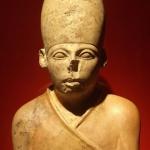
Khasekhemwy, also known as Khasekhemui, was the final pharaoh of the Second Dynasty of Egypt, ruling circa 2690 BCE. His reign marked the end of the Early Dynastic Period. Little is known about his early life, but he ascended to the throne during a period of turmoil and civil unrest. According to historical records, Khasekhemwy successfully reunified Egypt after a period of division and conflict, possibly between followers of the gods Horus and Seth. He is believed to have married a northern princess, Nemathap, to solidify his rule over a united Egypt. Khasekhemwy's reign saw significant architectural and administrative developments, including the construction of monumental structures at Abydos and Hierakonpolis. He died around 2686 BCE, and his successor, Djoser, founded the Third Dynasty, ushering in the Old Kingdom period.
Historical Context
Khasekhemwy's reign occurred during a pivotal transition in ancient Egyptian history. The Second Dynasty was marked by political fragmentation and regional conflicts, with evidence suggesting a division between Upper and Lower Egypt. Khasekhemwy's ability to reunify the kingdom laid the groundwork for the centralized state that characterized the Old Kingdom. His reign is significant for its contributions to the consolidation of royal authority, the establishment of administrative practices, and the promotion of monumental architecture. These developments set the stage for the golden age of pyramid construction and the flourishing of Egyptian culture in subsequent dynasties. Khasekhemwy's legacy is also notable for his efforts to reconcile religious factions, symbolized by the dual representation of Horus and Seth on his serekh (royal name plate).
Beliefs
Khasekhemwy's reign reflected a syncretic approach to Egyptian religion, particularly in his reconciliation of the gods Horus and Seth. His serekh uniquely features both deities, symbolizing the unification of Upper and Lower Egypt under his rule. This dual representation suggests an effort to harmonize competing religious and political factions, emphasizing the pharaoh's role as a unifier and divine mediator. Khasekhemwy's architectural projects, such as the construction of the Shunet ez-Zebib at Abydos, also indicate a strong connection to religious and funerary traditions, reinforcing the divine nature of kingship.
Key Achievements
- Reunification of Egypt: Successfully ended civil strife and reunified Upper and Lower Egypt after a period of division.
- Monumental Architecture: Commissioned significant building projects, including the Shunet ez-Zebib at Abydos and the Gisr el-Mudir at Saqqara, precursors to later pyramid complexes.
- Administrative Reforms: Strengthened centralized governance, laying the foundation for the bureaucratic state of the Old Kingdom.
- Religious Syncretism: Promoted the dual worship of Horus and Seth, symbolizing political and religious reconciliation.
- Military Campaigns: Secured Egypt's borders and maintained stability through military prowess, as evidenced by inscriptions depicting slain enemies.
- Dynastic Marriage: Married Nemathap, a northern princess, to consolidate his rule and ensure dynastic continuity.
- Cultural Legacy: His reign bridged the Early Dynastic Period and the Old Kingdom, influencing the trajectory of Egyptian civilization.