Links
Life events
Wikipedia ↗
Wikipedia ↗
Wikipedia ↗
Wikipedia ↗
Wikipedia ↗
Wikipedia ↗
Wikipedia ↗
Article
Life Summary
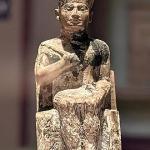
Khufu, also known by his Hellenized name Cheops, was the second pharaoh of the Fourth Dynasty of ancient Egypt, ruling from around 2589 BCE to 2566 BCE. He was the son of King Sneferu and Queen Hetepheres I. Little is known about Khufu's personal life or reign beyond his most famous achievement: the construction of the Great Pyramid of Giza. Ancient Greek historians, such as Herodotus, described Khufu as a cruel and tyrannical ruler, though these accounts are considered unreliable due to their late date and lack of contemporary Egyptian sources. Khufu's mummy has never been found, and the exact circumstances of his death remain unknown. He was succeeded by his son Djedefre.
Historical Context
Khufu ruled during the Old Kingdom period, often referred to as the "Age of the Pyramids." This era was marked by strong centralized government, economic prosperity, and significant advancements in architecture and engineering. The Fourth Dynasty saw the peak of pyramid construction, with Khufu's reign representing the pinnacle of this architectural ambition. The Great Pyramid of Giza, built as Khufu's tomb, reflects the pharaoh's power, the sophistication of Egyptian society, and the importance of religion and the afterlife in ancient Egyptian culture. Khufu's pyramid was the tallest man-made structure in the world for over 3,800 years, symbolizing the might and ingenuity of ancient Egypt. His reign solidified the pharaoh's role as both a political and religious leader, with the pyramid serving as a testament to his divine authority.
Beliefs
Khufu, like other pharaohs, was believed to be a god in human form, specifically an incarnation of the god Horus. Ancient Egyptians held strong beliefs in the afterlife, and the construction of monumental tombs like the Great Pyramid was intended to ensure the pharaoh's safe passage and eternal life. The pyramid's intricate design, including its internal chambers and passageways, was meant to protect the pharaoh's body and treasures while facilitating his journey to the afterlife. Khufu's reign reinforced the religious and cultural significance of the pharaoh as the intermediary between the gods and the people.
Key Achievements
- Commissioned the Great Pyramid of Giza, the largest and most famous pyramid in Egypt, standing at an original height of 146.6 meters (481 feet).
- Established a centralized administration to oversee the construction of the Great Pyramid, demonstrating advanced organizational and logistical capabilities.
- Expanded trade networks, as evidenced by artifacts from distant regions like Nubia and the Levant found in Egypt during his reign.
- Maintained stability and prosperity in Egypt, allowing for the continuation of monumental building projects and cultural developments.
- His reign marked the height of pyramid construction, setting a standard for future pharaohs and leaving a lasting legacy in Egyptian architecture.
- The Great Pyramid remains one of the most enduring symbols of ancient Egypt, attracting millions of visitors and scholars each year.