Links
Life events
Wikipedia ↗
Wikipedia ↗
Wikipedia ↗
Wikipedia ↗
Wikipedia ↗
Wikipedia ↗
Wikipedia ↗
Wikipedia ↗
Wikipedia ↗
Article
Life Summary
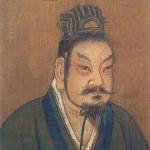
King Cheng of Zhou (周成王) was the second king of the Zhou dynasty in ancient China, reigning from approximately 1042 to 1021 BCE. Born as Ji Song (姬誦), he was the son of King Wu of Zhou, the founder of the Zhou dynasty, and ascended to the throne as a young child following his father's death. Due to his youth, his uncle, the Duke of Zhou, served as regent and played a crucial role in stabilizing the kingdom. King Cheng's reign was marked by efforts to consolidate Zhou authority over the newly conquered Shang territories and to establish a feudal system that would define Chinese governance for centuries. He is traditionally credited with overseeing the construction of the eastern capital at Luoyang, which helped secure Zhou control over its eastern territories. King Cheng died around 1021 BCE and was succeeded by his son, King Kang of Zhou.
Historical Context
King Cheng of Zhou ruled during a pivotal period in Chinese history, following the Zhou dynasty's overthrow of the Shang dynasty in the Battle of Muye (circa 1046 BCE). The Zhou dynasty introduced the concept of the Mandate of Heaven, which justified their rule as divinely ordained and set a precedent for dynastic legitimacy in China. This era was characterized by the establishment of a feudal system, where regional lords (zhuhou) were granted lands in exchange for loyalty and military support to the Zhou king. King Cheng's reign was critical in transitioning from the chaos of conquest to a more structured and centralized form of governance. His rule laid the foundation for the Western Zhou period, often regarded as a golden age of Chinese culture and political stability. The Duke of Zhou's regency during his early years was instrumental in suppressing rebellions and solidifying Zhou authority, ensuring the dynasty's survival and influence.
Beliefs
King Cheng of Zhou, like his predecessors, adhered to the Zhou dynasty's religious and philosophical traditions, which emphasized the Mandate of Heaven (天命). This concept posited that the ruler's authority was granted by heaven and could be revoked if the ruler failed to govern justly. The Zhou also promoted ancestor worship and rituals to legitimize their rule and maintain harmony between the human and divine realms. The Duke of Zhou, who acted as regent, was a key figure in codifying these beliefs and ensuring their integration into Zhou governance. Confucianism later drew heavily from these early Zhou ideals, particularly the emphasis on moral leadership and the proper conduct of rulers.
Key Achievements
- Consolidation of Zhou Rule: Successfully maintained control over the newly conquered Shang territories, preventing large-scale rebellions and ensuring the stability of the Zhou dynasty.
- Establishment of the Feudal System: Formalized the fengjian (封建) system, granting lands to loyal nobles in exchange for military service and tribute, which became a cornerstone of Chinese governance for centuries.
- Construction of Luoyang: Oversaw the establishment of the eastern capital at Luoyang, which strengthened Zhou influence in the eastern regions and facilitated better administration of the kingdom.
- Suppression of Rebellions: With the help of the Duke of Zhou, quelled rebellions by former Shang nobles and regional leaders, securing the Zhou dynasty's authority.
- Promotion of the Mandate of Heaven: Reinforced the ideological foundation of Zhou rule, which justified their overthrow of the Shang and set a precedent for future dynastic transitions in China.
- Cultural and Ritual Developments: Supported the development of Zhou rituals and cultural practices, which became integral to Chinese civilization and were later idealized by Confucian scholars.