Links
Life events
Wikipedia ↗
Wikipedia ↗
Wikipedia ↗
Wikipedia ↗
Wikipedia ↗
Wikipedia ↗
Article
Life Summary
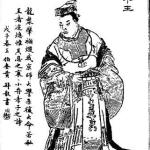
King Ping of Zhou (周平王), personal name Ji Yijiu (姬宜臼), was born in 781 BCE as the son of King You of Zhou. His early life was marked by the decline of the Western Zhou dynasty, exacerbated by his father's controversial decisions, including favoring his concubine Bao Si over his queen. This led to political instability and conflict with regional lords. In 771 BCE, the Quanrong nomads, allied with disaffected nobles, invaded the Zhou capital, Haojing, killing King You. Ji Yijiu was subsequently enthroned as King Ping in 770 BCE, but the Zhou court was forced to relocate eastward to Luoyang due to the threat of further invasions. This move marked the beginning of the Eastern Zhou dynasty and the Spring and Autumn period. King Ping ruled until his death in 720 BCE, overseeing a period of decentralized power where regional states gained prominence.
Historical Context
King Ping's reign occurred during a pivotal transition in Chinese history. The Western Zhou dynasty had established a feudal system where the king ruled as the Son of Heaven, with regional lords owing allegiance and tribute. However, by the time of King You, the dynasty's authority had weakened due to internal strife and external threats. The relocation to Luoyang symbolized the loss of direct control over the western territories and the rise of powerful regional states like Jin, Qin, and Qi. This period, known as the Spring and Autumn period, was characterized by frequent warfare, diplomatic maneuvering, and the gradual erosion of Zhou authority. Despite this, the Zhou king retained symbolic importance as the nominal head of the Chinese world, and the dynasty's cultural and ritual traditions continued to influence the region. King Ping's reign thus set the stage for the subsequent Warring States period, where larger states vied for dominance.
Beliefs
King Ping's reign was deeply rooted in the Confucian and Zhou traditions that emphasized the Mandate of Heaven—a belief that the ruler's authority was divinely sanctioned but could be lost through misrule. The chaos of his father's reign and the subsequent fall of the Western Zhou reinforced the idea that moral governance was essential for maintaining power. The Eastern Zhou period also saw the rise of philosophical schools, such as Confucianism and Daoism, which sought to address the era's political and social instability. While King Ping himself was not a philosopher, his reign occurred during a time when these ideas were beginning to take shape, influencing later Chinese thought and governance.
Key Achievements
- Relocation of the Zhou Capital: Moved the capital from Haojing to Luoyang in 770 BCE, establishing the Eastern Zhou dynasty and ensuring the survival of the Zhou house.
- Symbolic Leadership: Maintained the Zhou king's role as the nominal head of the Chinese feudal system, preserving the dynasty's cultural and ritual significance despite diminished political power.
- Diplomatic Engagement: Navigated relationships with rising regional states, such as Jin and Qin, which would later dominate Chinese politics during the Warring States period.
- Marking the Spring and Autumn Period: His reign initiated the Spring and Autumn period, a time of significant cultural and philosophical development in China.
- Legacy of Decentralization: Oversaw the transition from a centralized feudal system to a more fragmented political landscape, which ultimately led to the rise of the first imperial dynasty, the Qin.