Links
Life events
Wikipedia ↗
Wikipedia ↗
Wikipedia ↗
Wikipedia ↗
Wikipedia ↗
Wikipedia ↗
Wikipedia ↗
Article
Life Summary
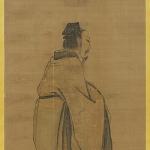
King Wu of Zhou, born Ji Fa (姬發), was the first sovereign of the Zhou dynasty in ancient China. His exact birth date is uncertain, but he is believed to have lived during the 11th century BCE. He was the second son of King Wen of Zhou, who laid the groundwork for the Zhou state's rise to power. After his father's death, Ji Fa inherited the throne and continued his father's mission to challenge the corrupt Shang dynasty under King Zhou of Shang. In 1046 BCE, King Wu led a coalition of regional states in the Battle of Muye, decisively defeating the Shang forces. Following this victory, he established the Zhou dynasty, marking the beginning of a new era in Chinese history. King Wu ruled for only a few years before his death, after which his brother, the Duke of Zhou, served as regent for his young son, King Cheng of Zhou.
Historical Context
King Wu of Zhou's reign occurred during a pivotal transition in ancient Chinese history. The Shang dynasty, which had ruled for over six centuries, was plagued by corruption, tyranny, and moral decay, particularly under its last king, Zhou of Shang. The Zhou state, located in the Wei River valley, had grown in power and influence under King Wu's father, King Wen. The Zhou promoted the concept of the "Mandate of Heaven," which justified their overthrow of the Shang by claiming that Heaven had withdrawn its favor from the Shang due to their misrule. This idea became a cornerstone of Chinese political philosophy, shaping the legitimacy of dynasties for millennia. King Wu's establishment of the Zhou dynasty ushered in an era of feudalism, decentralized governance, and cultural flourishing that lasted for nearly 800 years, making it one of the longest-lasting dynasties in Chinese history.
Beliefs
King Wu of Zhou was deeply influenced by the Zhou cultural and philosophical traditions, which emphasized virtue, righteousness, and the Mandate of Heaven. He believed in the moral responsibility of rulers to govern justly and benevolently. The Zhou ideology, as articulated by King Wu and his advisors, held that a ruler's legitimacy was contingent upon their moral conduct and the well-being of their people. This belief system was used to justify the overthrow of the Shang dynasty, which was seen as having lost the Mandate of Heaven due to its tyranny and corruption. King Wu's reign also saw the promotion of rituals, ancestor worship, and the veneration of Heaven, which became integral to Chinese statecraft and culture.
Key Achievements
- Overthrow of the Shang Dynasty: Led the successful military campaign against the Shang in the Battle of Muye (1046 BCE), ending the Shang dynasty and establishing the Zhou dynasty.
- Establishment of the Zhou Dynasty: Founded the Zhou dynasty, which became one of the most influential and long-lasting dynasties in Chinese history.
- Implementation of the Mandate of Heaven: Popularized the concept of the Mandate of Heaven, which became a fundamental principle in Chinese political philosophy, justifying dynastic change and the moral obligations of rulers.
- Feudal System: Introduced a feudal system of governance, granting lands and titles to loyal nobles and relatives, which helped stabilize and expand Zhou control over a vast territory.
- Cultural and Ritual Reforms: Promoted rituals, ancestor worship, and the veneration of Heaven, which strengthened the cultural and religious foundations of the Zhou state.
- Expansion of Zhou Territory: Extended Zhou influence over a large portion of northern and central China, laying the groundwork for the dynasty's future growth.
- Posthumous Legacy: His reign set a precedent for virtuous rule and moral governance, influencing Confucian ideals and Chinese political thought for centuries.