Links
Life events
1,390 BC
Birth in Babylon
Kurigalzu I was born into the Kassite dynasty, likely in Babylon, the capital of the Kassite-ruled Babylonia. His exact birthplace and date remain uncertain, but he was a member of the royal family.
Kurigalzu I was born into the Kassite dynasty, likely in Babylon, the capital of the Kassite-ruled Babylonia. His exact birthplace and date remain uncertain, but he was a member of the royal family.
Wikipedia ↗
1,375 BC
Coronation in Babylon
Kurigalzu I ascended to the throne of Babylon after the death of his predecessor, likely his father or another close relative. His reign marked a period of stability and expansion for the Kassite dynasty.
Kurigalzu I ascended to the throne of Babylon after the death of his predecessor, likely his father or another close relative. His reign marked a period of stability and expansion for the Kassite dynasty.
Wikipedia ↗
1,370 BC
Battle near Dur-Kurigalzu
Kurigalzu I led a military campaign against the Elamites, securing Babylonian control over the region. This battle near Dur-Kurigalzu (modern Aqar Quf) reinforced Kassite dominance in southern Mesopotamia.
Kurigalzu I led a military campaign against the Elamites, securing Babylonian control over the region. This battle near Dur-Kurigalzu (modern Aqar Quf) reinforced Kassite dominance in southern Mesopotamia.
Wikipedia ↗
1,365 BC
Campaign in the Zagros Mountains
Kurigalzu I conducted military expeditions into the Zagros Mountains to subdue rebellious tribes and secure Babylonian trade routes. These campaigns expanded Kassite influence into western Iran.
Kurigalzu I conducted military expeditions into the Zagros Mountains to subdue rebellious tribes and secure Babylonian trade routes. These campaigns expanded Kassite influence into western Iran.
Wikipedia ↗
1,359 BC
Foundation of Dur-Kurigalzu
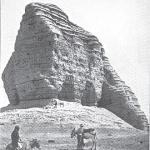
Kurigalzu I established Dur-Kurigalzu (modern Aqar Quf) as a new administrative and religious center for the Kassite dynasty. The city included a ziggurat and palaces, symbolizing Babylonian power.
Kurigalzu I established Dur-Kurigalzu (modern Aqar Quf) as a new administrative and religious center for the Kassite dynasty. The city included a ziggurat and palaces, symbolizing Babylonian power.
Wikipedia ↗
1,355 BC
Diplomatic Relations with Egypt
Kurigalzu I exchanged diplomatic correspondence with the Egyptian pharaoh Amenhotep III, as recorded in the Amarna letters. This marked a period of peaceful relations between the two powers.
Kurigalzu I exchanged diplomatic correspondence with the Egyptian pharaoh Amenhotep III, as recorded in the Amarna letters. This marked a period of peaceful relations between the two powers.
Wikipedia ↗
1,340 BC
Death in Babylon
Kurigalzu I died in Babylon after a long reign, leaving behind a legacy of military success, architectural achievements, and political stability. His successors continued his policies of expansion and consolidation.
Kurigalzu I died in Babylon after a long reign, leaving behind a legacy of military success, architectural achievements, and political stability. His successors continued his policies of expansion and consolidation.
Wikipedia ↗
Article
Life Summary
Kurigalzu I was a king of the Kassite dynasty that ruled over Babylon in the 14th century BCE. Little is known about his early life, but he ascended to the throne during a period of instability following the decline of Babylon’s influence under earlier Kassite rulers. His reign is traditionally dated to approximately 1390–1370 BCE, though exact dates remain uncertain. Kurigalzu I is best remembered for his military campaigns, administrative reforms, and monumental building projects. He consolidated Kassite control over Babylonia, expanded its borders, and strengthened its political and cultural influence in Mesopotamia. His death is not well-documented, but he was succeeded by his son, Kadashman-Harbe I.
Historical Context
Kurigalzu I ruled during the Late Bronze Age, a time of shifting power dynamics in the ancient Near East. The Kassite dynasty, originally from the Zagros Mountains, had established itself in Babylon after the fall of the Old Babylonian Empire. By Kurigalzu’s time, Babylon faced competition from the rising powers of Assyria, Elam, and the Hittite Empire. His reign marked a resurgence of Babylonian strength, as he reasserted control over key regions and engaged in diplomacy with neighboring states. His construction of Dur-Kurigalzu (modern-day Aqar Quf) symbolized Babylon’s renewed prominence and served as a political and religious center. Kurigalzu’s efforts laid the foundation for Babylon’s continued influence in the region for centuries.
Beliefs
Kurigalzu I, like other Mesopotamian rulers, adhered to the traditional polytheistic religion of Babylon. He promoted the worship of Marduk, the patron deity of Babylon, and other major gods such as Enlil and Ea. His inscriptions and building projects often invoked divine favor, emphasizing his role as a pious king chosen by the gods to restore order and prosperity. The construction of temples and ziggurats under his rule reflected his commitment to maintaining the religious traditions of Mesopotamia.
Key Achievements
- Military Expansion: Successfully campaigned against the Sealand Dynasty in southern Mesopotamia, reasserting Babylonian control over the region.
- Diplomatic Relations: Established or strengthened ties with Egypt, Assyria, and Elam through correspondence and possible alliances.
- Construction of Dur-Kurigalzu: Founded a new capital city, Dur-Kurigalzu, which included a royal palace, temples, and a ziggurat dedicated to Enlil.
- Administrative Reforms: Reorganized Babylonian governance, improving tax collection and legal systems to stabilize the kingdom.
- Cultural Revival: Promoted Babylonian literature, art, and religious practices, ensuring the continuity of Mesopotamian traditions.
- Economic Prosperity: Oversaw a period of economic growth, facilitated by trade and agricultural development in the region.