Links
Life events
Wikipedia ↗
Wikipedia ↗
Wikipedia ↗
Wikipedia ↗
Wikipedia ↗
Wikipedia ↗
Article
Life Summary
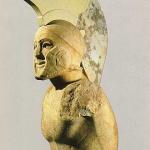
Leonidas I was a king of the Greek city-state of Sparta, ruling from around 489 BCE until his death in 480 BCE. He was the third son of King Anaxandridas II of Sparta and belonged to the Agiad dynasty. Leonidas succeeded his half-brother Cleomenes I to the throne and married Cleomenes' daughter, Gorgo. His most famous role was as the commander of the Greek forces during the Battle of Thermopylae in 480 BCE, where he led a small contingent, including 300 Spartans, against the massive Persian army of Xerxes I. Leonidas and his men fought valiantly but were ultimately defeated, with Leonidas dying in battle. His sacrifice became a symbol of courage and resistance against overwhelming odds.
Historical Context
Leonidas I lived during a critical period in ancient Greek history, marked by the Greco-Persian Wars. The Persian Empire, under King Xerxes I, sought to conquer Greece and expand its territory. The Greek city-states, though often divided, united to resist the Persian invasion. Leonidas' stand at Thermopylae was a pivotal moment in this conflict, delaying the Persian advance and allowing the Greeks to regroup and ultimately defeat the Persians at the Battle of Salamis and Plataea. His leadership and sacrifice became legendary, embodying the Spartan ideals of bravery, discipline, and self-sacrifice. Leonidas' actions also highlighted the importance of unity among the Greek city-states in the face of a common enemy.
Beliefs
Leonidas adhered to the strict military and cultural traditions of Sparta, which emphasized discipline, courage, and loyalty to the state. Spartan society was highly militarized, and Leonidas was trained from a young age to be a warrior. He believed in the importance of defending Sparta and Greece against external threats, even at the cost of his own life. His actions at Thermopylae reflected his commitment to these values and his willingness to make the ultimate sacrifice for his people.
Key Achievements
- Leadership at Thermopylae: Commanded the Greek forces, including 300 Spartans, in a heroic last stand against the Persian army in 480 BCE.
- Symbol of Resistance: Became a symbol of courage and defiance against overwhelming odds, inspiring future generations.
- Delaying Persian Advance: Successfully delayed the Persian army, allowing the Greeks to prepare for subsequent battles.
- Uniting Greek City-States: Played a role in fostering unity among the Greek city-states during the Greco-Persian Wars.
- Military Training: Upheld and exemplified the rigorous military training and discipline of Sparta, setting an example for Spartan warriors.