Links
Life events
Wikipedia ↗
Wikipedia ↗
Wikipedia ↗
Wikipedia ↗
Wikipedia ↗
Wikipedia ↗
Article
Life Summary
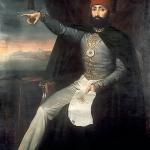
Mahmud II was born on July 20, 1785, in Constantinople (modern-day Istanbul), the son of Sultan Abdul Hamid I. His early life was marked by political instability, as the Ottoman Empire faced internal strife and external threats. After the deposition of his cousin, Sultan Mustafa IV, Mahmud ascended to the throne on July 28, 1808, at the age of 23. His reign began amid the turmoil of the Napoleonic Wars and the growing influence of European powers in Ottoman affairs.
Mahmud II is best known for his sweeping reforms aimed at modernizing the Ottoman Empire. His early years were dominated by efforts to suppress rebellions and consolidate power. In 1826, he orchestrated the Auspicious Incident, the violent dissolution of the Janissary Corps, which had become a reactionary force opposing reform. This allowed him to implement military and administrative changes modeled after European systems. He established a new army, the Asakir-i Mansure-i Muhammediye, and introduced Western-style clothing, education, and infrastructure projects.
Mahmud II also centralized the empire's administration, reducing the power of provincial governors and religious leaders. His reforms extended to taxation, land tenure, and legal systems, laying the groundwork for the later Tanzimat reforms. Despite his efforts, the empire continued to face challenges, including the Greek War of Independence (1821–1832) and conflicts with Russia. Mahmud II died on July 1, 1839, in Constantinople, leaving behind a legacy of reform and transformation.
Historical Context
Mahmud II ruled during a period of decline for the Ottoman Empire, often referred to as the "Sick Man of Europe." The empire had lost significant territories, including Egypt, which had effectively become autonomous under Muhammad Ali Pasha. Internally, the empire was plagued by inefficiency, corruption, and resistance to change, particularly from the Janissaries and conservative religious factions. The rise of European powers, such as Britain, France, and Russia, further threatened Ottoman sovereignty.
Mahmud II's reign is pivotal because it marked the beginning of the empire's modernization. His reforms were driven by the need to strengthen the state against internal and external threats. The dismantling of the Janissaries was a bold move that removed a major obstacle to progress. His efforts to centralize power and adopt Western military and administrative practices set the stage for the Tanzimat era, which sought to create a more efficient and unified empire. Mahmud II's policies also reflected a shift in Ottoman identity, as the empire began to embrace secular and European influences while grappling with its Islamic heritage.
Beliefs
Mahmud II believed in the necessity of reform to preserve the Ottoman Empire. He was influenced by Western ideas and recognized that the empire's survival depended on adopting modern military, administrative, and educational systems. While he maintained the empire's Islamic identity, he sought to reduce the influence of conservative religious leaders who opposed change. His belief in centralized authority drove his efforts to curb the power of provincial governors and local elites. Mahmud II also valued loyalty and discipline, as evidenced by his creation of a new, loyal army to replace the Janissaries.
Key Achievements
- Dismantled the Janissary Corps (1826): Eliminated the reactionary military force that had resisted reform for centuries, paving the way for modernization.
- Established the Asakir-i Mansure-i Muhammediye: Created a new, Western-style army trained by European advisors, improving the empire's military capabilities.
- Centralized Administration: Reduced the power of provincial governors and religious leaders, strengthening the central government's control over the empire.
- Introduced Western-Style Reforms: Adopted European clothing, education systems, and infrastructure projects, such as the first Ottoman postal service and medical school.
- Modernized Legal and Tax Systems: Implemented changes to land tenure and taxation, improving revenue collection and legal consistency.
- Suppressed Rebellions: Successfully quelled internal uprisings, including the Greek War of Independence, though the empire lost control of Greece.
- Promoted Secular Education: Established schools that taught Western sciences and languages, reducing the dominance of religious education.
- Laid Groundwork for Tanzimat Reforms: His policies inspired the broader Tanzimat reforms of the mid-19th century, which further modernized the empire.