Links
Life events
Wikipedia ↗
Wikipedia ↗
Wikipedia ↗
Wikipedia ↗
Wikipedia ↗
Wikipedia ↗
Wikipedia ↗
Wikipedia ↗
Article
Life Summary
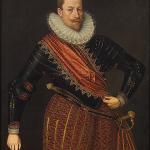
Matthias was born on February 24, 1557, in Vienna, the fourth son of Emperor Maximilian II and Maria of Spain. As a younger son, he was initially not expected to inherit the throne, but his elder brothers' deaths and political maneuvering positioned him as a key figure in the Habsburg dynasty. Matthias spent his early years in the court of his uncle, Philip II of Spain, where he gained political experience. He later served as governor of the Habsburg Netherlands from 1578 to 1581 and as governor of Austria from 1593 to 1606.
Matthias became Holy Roman Emperor in 1612 after the death of his elder brother, Rudolf II, who had grown increasingly reclusive and mentally unstable. Matthias's reign was marked by efforts to stabilize the empire amid growing religious tensions between Catholics and Protestants. He sought to reconcile the warring factions through diplomacy, culminating in the Peace of Vienna in 1606 and the Peace of Pressburg in 1615, which granted religious freedoms to Protestants in Hungary and Austria. However, these agreements were temporary and did little to address the underlying conflicts.
Matthias's health declined in his later years, and he died on March 20, 1619, in Vienna. He was succeeded by his cousin Ferdinand II, whose rigid policies and intolerance of Protestantism helped spark the Thirty Years' War, one of the most devastating conflicts in European history.
Historical Context
Matthias ruled during a period of intense religious and political turmoil in Europe. The Protestant Reformation had divided the Holy Roman Empire, and the Habsburg dynasty, which controlled much of Central Europe, was deeply entrenched in the Catholic Counter-Reformation. The empire was a patchwork of semi-autonomous states, each with its own religious and political allegiances, making governance difficult. Matthias's predecessor, Rudolf II, had struggled with mental illness and political paralysis, leaving the empire in a state of disarray.
Matthias's reign was an attempt to restore stability and unity to the empire. His efforts to negotiate religious peace were part of a broader trend among European rulers to avoid large-scale conflict. However, the underlying tensions between Catholics and Protestants, as well as the ambitions of regional princes, made lasting peace elusive. Matthias's death in 1619 marked the end of a brief period of relative calm, as his successor, Ferdinand II, pursued a more aggressive Catholic agenda, leading to the outbreak of the Thirty Years' War in 1618.
Matthias's significance lies in his role as a transitional figure. His attempts at diplomacy and compromise reflected the challenges of governing a fractured empire, and his failures highlighted the deep divisions that would soon erupt into full-scale war.
Beliefs
Matthias was a devout Catholic but recognized the need for religious tolerance to maintain stability in the empire. He supported the Counter-Reformation but sought to avoid outright persecution of Protestants, believing that compromise was necessary to prevent civil war. His policies were pragmatic, prioritizing the preservation of Habsburg power over ideological purity.
Key Achievements
- Peace of Vienna (1606): Negotiated a settlement with Hungarian Protestants, granting them religious freedoms and ending a decade-long rebellion.
- Peace of Pressburg (1615): Extended religious freedoms to Protestants in Austria, temporarily easing tensions between Catholics and Protestants.
- Stabilization of the Habsburg Dynasty: Secured the succession for his cousin Ferdinand II, ensuring the continuity of Habsburg rule.
- Diplomatic Efforts: Attempted to mediate conflicts between Catholic and Protestant states, delaying the outbreak of the Thirty Years' War.
- Governorship of the Netherlands: Served as governor of the Habsburg Netherlands, gaining valuable political and military experience.
- Governorship of Austria: Oversaw the administration of Austria, strengthening Habsburg control over the region.