Links
Life events
Wikipedia ↗
Wikipedia ↗
Wikipedia ↗
Wikipedia ↗
Wikipedia ↗
Wikipedia ↗
Wikipedia ↗
Wikipedia ↗
Wikipedia ↗
Wikipedia ↗
Article
Life Summary
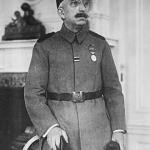
Mehmed VI, born on January 14, 1861, was the 36th and final Sultan of the Ottoman Empire. He ascended to the throne on July 4, 1918, following the death of his half-brother, Mehmed V. His early life was marked by a traditional Ottoman princely education, focusing on Islamic studies, history, and languages. Mehmed VI's reign began during the final months of World War I, a period of immense turmoil for the empire. The Ottoman Empire was on the losing side of the war, and its territories were being partitioned by the Allied powers. Mehmed VI's rule was characterized by efforts to preserve the empire amid growing nationalist movements and external pressures. In 1922, the Turkish Grand National Assembly abolished the sultanate, and Mehmed VI went into exile on November 17, 1922. He lived the remainder of his life in exile, first in Malta, then on the Italian Riviera, and finally in San Remo, where he died on May 16, 1926.
Historical Context
Mehmed VI's reign occurred during a pivotal period in world history, marked by the aftermath of World War I and the collapse of the Ottoman Empire, which had lasted for over six centuries. The empire had been in decline for centuries, but the war accelerated its dissolution. The Allied powers, particularly Britain and France, sought to divide Ottoman territories through agreements like the Sykes-Picot Agreement. Meanwhile, nationalist movements within the empire, particularly the Turkish National Movement led by Mustafa Kemal Atatürk, gained momentum. The abolition of the sultanate in 1922 and the subsequent establishment of the Republic of Turkey in 1923 marked the end of the Ottoman era and the beginning of a new, secular Turkish state. Mehmed VI's reign symbolized the end of an era and the transition from imperial rule to modern nation-statehood in the region.
Beliefs
Mehmed VI was a devout Muslim and adhered to traditional Ottoman Islamic values. He believed in the divine right of sultans to rule and saw himself as the caliph, the spiritual leader of the Muslim world. However, his efforts to maintain the empire's integrity and his collaboration with Allied powers during the occupation of Istanbul drew criticism from Turkish nationalists, who viewed him as a symbol of the old, failed order. His beliefs and actions were often at odds with the rising tide of secular nationalism that would define the new Turkish Republic.
Key Achievements
- Ascension to the Throne: Became the 36th Sultan of the Ottoman Empire in 1918, succeeding his half-brother Mehmed V.
- Signing of the Treaty of Sèvres: Represented the Ottoman Empire in signing the Treaty of Sèvres in 1920, which formalized the partitioning of Ottoman territories but was later rejected by Turkish nationalists.
- Collaboration with Allied Powers: Worked with Allied forces during their occupation of Istanbul, attempting to navigate the empire through its final years.
- Exile and End of the Sultanate: His exile in 1922 marked the official end of the Ottoman Sultanate, paving the way for the establishment of the Republic of Turkey.
- Symbol of Transition: Served as a symbolic figure representing the end of the Ottoman Empire and the beginning of a new era in Turkish history.