Links
Life events
Wikipedia ↗
Wikipedia ↗
Wikipedia ↗
Wikipedia ↗
Wikipedia ↗
Wikipedia ↗
Wikipedia ↗
Wikipedia ↗
Wikipedia ↗
Wikipedia ↗
Article
Life Summary
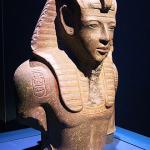
Merneptah, also known as Merneptah Ramesses, was the fourth pharaoh of the Nineteenth Dynasty of Ancient Egypt. He was the thirteenth son of Ramesses II and the only one to ascend the throne after his father's exceptionally long reign. Merneptah was likely in his sixties or seventies when he became pharaoh, ruling from approximately 1213 BCE to 1203 BCE. His birth name was Merneptah Hotep-her-maat, meaning "Beloved of Ptah, Joyful is Truth."
Early in his reign, Merneptah faced military threats, particularly from the Libyans and the Sea Peoples, who sought to invade Egypt. He successfully repelled these invasions, securing Egypt's borders and maintaining its dominance in the region. His military campaigns are well-documented in inscriptions and reliefs, notably on the walls of the Karnak Temple.
Merneptah's reign also saw continued construction projects, including additions to temples and monuments initiated by his father. He completed the mortuary temple of Ramesses II and built his own mortuary temple near Thebes. Merneptah died around 1203 BCE and was buried in the Valley of the Kings in tomb KV8. His mummy was later discovered in the cache at Deir el-Bahari in 1898.
Historical Context
Merneptah ruled during the late Bronze Age, a period marked by significant geopolitical shifts and upheavals. The Nineteenth Dynasty, founded by Ramesses I, was a time of prosperity and military strength for Egypt. However, by Merneptah's reign, the empire faced increasing external pressures, particularly from the Libyans and the mysterious Sea Peoples, who disrupted trade routes and threatened regional stability.
Egypt's dominance in the Near East was waning, and Merneptah's military successes were crucial in delaying the decline of Egyptian power. His reign is also notable for the Merneptah Stele, an inscription that contains the earliest known reference to Israel outside the Bible, providing valuable historical context for the region's ancient peoples.
Merneptah's rule bridged the gap between the long, stable reign of Ramesses II and the subsequent period of instability that would eventually lead to the end of the New Kingdom. His efforts to maintain Egypt's territorial integrity and cultural legacy were vital in preserving the empire's influence during a turbulent era.
Beliefs
Merneptah, like his predecessors, adhered to the traditional religious beliefs of Ancient Egypt. He was a devout follower of the Egyptian pantheon, particularly the god Ptah, as reflected in his birth name. The pharaoh was considered a divine ruler, the intermediary between the gods and the people, responsible for maintaining ma'at (cosmic order, truth, and justice).
Merneptah's inscriptions and temple reliefs emphasize his piety and his role in upholding the religious traditions of Egypt. He continued the practice of building and restoring temples, ensuring the gods' favor and the prosperity of the kingdom. His military campaigns were often framed as divine missions to protect Egypt from chaos and foreign invaders.
Key Achievements
- Military Victories: Successfully repelled invasions by the Libyans and the Sea Peoples, securing Egypt's borders and maintaining its regional dominance.
- Merneptah Stele: Commissioned the Merneptah Stele, an inscription that includes the earliest known reference to Israel, providing critical historical and biblical context.
- Construction Projects: Completed the mortuary temple of Ramesses II and built his own mortuary temple near Thebes, contributing to Egypt's architectural legacy.
- Temple Additions: Expanded and decorated temples, including the Karnak Temple, with inscriptions and reliefs documenting his reign and military campaigns.
- Preservation of Stability: Maintained political and economic stability in Egypt during a period of increasing external threats and regional instability.
- Burial: Constructed his tomb (KV8) in the Valley of the Kings, which was later discovered with his mummy in the Deir el-Bahari cache.