Links
Life events
Wikipedia ↗
Wikipedia ↗
Wikipedia ↗
Wikipedia ↗
Wikipedia ↗
Wikipedia ↗
Wikipedia ↗
Wikipedia ↗
Wikipedia ↗
Article
Life Summary
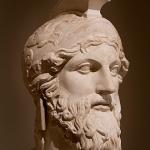
Miltiades the Younger (c. 550–489 BCE) was an Athenian general and statesman, renowned for his leadership during the Battle of Marathon. Born into the prominent Philaid clan, he initially served as a tyrant in the Thracian Chersonese under Persian suzerainty before returning to Athens. His early career was marked by political maneuvering, including a failed attempt to establish control over the island of Paros. However, his defining moment came in 490 BCE when, as one of the ten Athenian strategoi (generals), he persuaded the Athenian assembly to confront the invading Persian forces led by Datis and Artaphernes. After the victory at Marathon, Miltiades fell from grace due to his failed Paros expedition and died in prison from wounds sustained during the campaign.
Historical Context
Miltiades lived during a pivotal era in Greek history, marked by the rise of the Persian Empire under Darius I and the growing tensions between the Greek city-states and Persia. The Ionian Revolt (499–493 BCE), in which Greek cities in Asia Minor rebelled against Persian rule, set the stage for the Greco-Persian Wars. Athens and Eretria had supported the revolt, provoking Darius to seek revenge. The Battle of Marathon (490 BCE) was the first major Persian invasion of mainland Greece and a turning point in Western history. Miltiades' victory demonstrated the effectiveness of Greek hoplite warfare and bolstered Athenian confidence, setting the stage for future resistance against Persia, including the battles of Thermopylae and Salamis. His leadership at Marathon cemented his legacy as a key figure in the defense of Greek independence and democracy.
Beliefs
Miltiades was a proponent of Athenian democracy and independence, though his early career included serving as a tyrant under Persian influence. His actions at Marathon reflected a belief in the superiority of Greek military tactics and the importance of resisting Persian expansion. He also valued strategic innovation, as evidenced by his decision to weaken the center of the Athenian phalanx to strengthen the flanks—a tactic that proved decisive in the battle. His later downfall suggests a belief in personal ambition, which clashed with Athenian democratic ideals.
Key Achievements
- Victory at the Battle of Marathon (490 BCE): Led the Athenian forces to a decisive victory over the Persians, halting their first invasion of Greece and preserving Athenian independence.
- Strategic Military Leadership: Pioneered the tactic of weakening the center of the phalanx to strengthen the flanks, a maneuver that became a hallmark of Greek warfare.
- Political Influence in Athens: Played a crucial role in persuading the Athenian assembly to confront the Persians at Marathon, demonstrating his ability to shape critical decisions.
- Early Career in the Thracian Chersonese: Served as a tyrant in the region, expanding Athenian influence and securing vital trade routes before returning to Athens.
- Contribution to Greek Unity: His leadership at Marathon inspired other Greek city-states to resist Persian domination, fostering a sense of shared purpose among the Greeks.