Links
Life events
Wikipedia ↗
Wikipedia ↗
Wikipedia ↗
Wikipedia ↗
Wikipedia ↗
Wikipedia ↗
Wikipedia ↗
Wikipedia ↗
Wikipedia ↗
Article
Life Summary
Naram-Sin, also known as Naram-Suen, was the third successor and grandson of Sargon of Akkad, the founder of the Akkadian Empire. He ruled from approximately 2254 to 2218 BCE, during the height of the Akkadian Empire’s power. Naram-Sin was born into a dynasty that had already established dominance over much of Mesopotamia, and he continued his grandfather’s legacy by further expanding the empire’s borders. His reign is notable for military campaigns that extended Akkadian influence from Elam (modern-day Iran) to Syria and Anatolia. Naram-Sin was one of the first Mesopotamian kings to declare himself a god, adopting the title "King of the Four Quarters," which signified his dominance over the known world. His death marked the beginning of the empire’s decline, though the exact circumstances remain unclear.
Historical Context
Naram-Sin ruled during the Akkadian Empire’s golden age, a period characterized by unprecedented political centralization, military expansion, and cultural flourishing in Mesopotamia. The empire, founded by Sargon of Akkad, was the world’s first true empire, uniting Sumerian city-states under a single ruler. Naram-Sin’s reign saw the consolidation of this power, with administrative reforms and the establishment of Akkadian as the lingua franca of the region. His deification reflected the growing trend of divine kingship in Mesopotamian politics, where rulers were increasingly seen as intermediaries between the gods and their people. The empire’s vast reach facilitated trade, cultural exchange, and the spread of Akkadian art and writing. However, the strain of maintaining such a large empire, combined with environmental factors like drought, contributed to its eventual collapse shortly after Naram-Sin’s death. His legacy endured in later Mesopotamian literature, where he was both celebrated as a great conqueror and vilified as a ruler whose hubris brought about divine punishment.
Beliefs
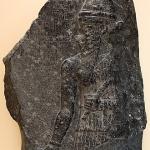
Naram-Sin is notable for being one of the first Mesopotamian rulers to declare himself a god during his lifetime, a practice that became more common in later periods. This self-deification was likely a political tool to reinforce his authority and legitimize his rule over a vast and diverse empire. He adopted the title "Divine Naram-Sin" and was worshipped in temples, a practice that set a precedent for future rulers in the region. His belief in his own divinity was tied to the idea that the gods had granted him victory and dominion over his enemies, a theme reflected in the famous "Victory Stele of Naram-Sin," which depicts him as a god-like figure ascending a mountain.
Key Achievements
- Military Expansion: Extended the Akkadian Empire to its greatest territorial extent, conquering regions from Elam (modern Iran) to Syria and Anatolia.
- Divine Kingship: Declared himself a god during his lifetime, a precedent that influenced later Mesopotamian rulers.
- Administrative Reforms: Strengthened the centralized administration of the empire, improving governance and tax collection.
- Cultural Legacy: Promoted Akkadian art and writing, leaving behind iconic monuments like the Victory Stele of Naram-Sin, which is one of the earliest known examples of narrative art.
- Economic Prosperity: Facilitated trade and economic growth across the empire, connecting distant regions through a network of roads and administrative centers.
- Religious Influence: Established temples and cults in his honor, integrating his divine status into the religious practices of the empire.
- Diplomatic Relations: Maintained alliances and tributary relationships with neighboring kingdoms, ensuring stability and control over conquered territories.