Links
Gallery
Life events
Wikipedia ↗
Wikipedia ↗
Wikipedia ↗
Wikipedia ↗
Wikipedia ↗
Wikipedia ↗
Wikipedia ↗
Article
Life Summary
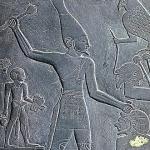
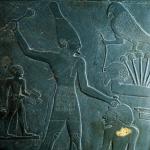
Narmer, also known as Menes in later traditions, is widely regarded as the first pharaoh to unify Upper and Lower Egypt, marking the beginning of the Early Dynastic Period. His existence is primarily attested through archaeological evidence, including the Narmer Palette and the Narmer Macehead, which depict his conquests and unification efforts. Little is known about his early life, but he likely ruled from the city of Thinis or Hierakonpolis. Narmer's reign is traditionally dated to around 3100 BCE, though exact dates remain uncertain. His death is similarly obscure, with no definitive records surviving from this early period.
Historical Context
Narmer's reign occurred during a transformative era in ancient Egyptian history, as the previously separate regions of Upper and Lower Egypt were consolidated into a single kingdom. This unification laid the foundation for the centralized state that would dominate the Nile Valley for millennia. The period was characterized by the development of hieroglyphic writing, monumental architecture, and a complex bureaucracy. Narmer's achievements set the stage for the Old Kingdom, during which the pyramids were constructed. His unification is often seen as the catalyst for Egypt's rise as one of the world's first great civilizations, influencing its political, cultural, and religious development for centuries.
Key Achievements
- Unification of Egypt: Credited with merging Upper and Lower Egypt into a single kingdom, establishing the first dynasty of a unified Egypt.
- Establishment of Memphis: Founded the city of Memphis, which became the political and cultural capital of ancient Egypt for much of its history.
- Symbolic Iconography: The Narmer Palette, a ceremonial engraving, depicts his victory over Lower Egypt and the unification, serving as a key historical and artistic artifact.
- Dynastic Rule: Laid the groundwork for the pharaonic system of governance, which would endure for nearly 3,000 years.
- Military Campaigns: Led successful military campaigns to consolidate power and secure Egypt's borders, ensuring stability and control over the Nile Delta.
- Cultural Integration: Promoted the integration of cultural and religious practices between Upper and Lower Egypt, fostering a shared national identity.
- Economic Development: Facilitated trade and economic growth by unifying the Nile Valley, enabling the efficient movement of goods and resources.