Links
Life events
Wikipedia ↗
Wikipedia ↗
Wikipedia ↗
Wikipedia ↗
Wikipedia ↗
Wikipedia ↗
Wikipedia ↗
Article
Life Summary
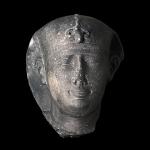
Nectanebo II, also known as Nakhthorheb, was the third and last pharaoh of the Thirtieth Dynasty of Egypt, ruling from 360 to 343 BCE. He ascended to the throne after the brief reign of his predecessor, Teos, who was overthrown in a military coup. Nectanebo II was a skilled military leader and administrator, initially securing Egypt’s borders and repelling early Persian invasions led by Artaxerxes III. His reign was marked by significant building projects, including temples and monuments across Egypt, reflecting his efforts to restore Egypt’s cultural and religious traditions. Despite his initial successes, Nectanebo II was ultimately defeated by the Persians in 343 BCE, leading to the second Persian occupation of Egypt. After his defeat, he fled to Nubia, and his fate remains uncertain, though some accounts suggest he may have died in exile.
Historical Context
Nectanebo II’s reign occurred during a period of decline for native Egyptian rule. The Thirtieth Dynasty was the last dynasty of indigenous pharaohs, and Egypt had already experienced multiple foreign invasions and occupations, including the First Persian Period. The Persian Empire, under Artaxerxes III, sought to reclaim Egypt as a satrapy, leading to repeated conflicts. Nectanebo II’s resistance was part of a broader struggle to maintain Egypt’s independence and cultural identity. His defeat marked the end of native Egyptian rule until the Ptolemaic Dynasty, established by Alexander the Great’s successors. His reign is significant for its efforts to revive Egypt’s religious and architectural traditions, leaving a lasting legacy in the temples and monuments he commissioned.
Beliefs
Nectanebo II was a devout follower of Egypt’s traditional religion, emphasizing the worship of gods like Amun, Horus, and Isis. He positioned himself as a defender of Egyptian culture and religion against foreign influences, particularly Persian Zoroastrianism. His building projects, such as the Temple of Isis at Philae and the Temple of Horus at Edfu, reflect his commitment to revitalizing Egypt’s religious practices and reinforcing the pharaoh’s role as a divine intermediary.
Key Achievements
- Successfully repelled early Persian invasions, securing Egypt’s independence temporarily.
- Commissioned extensive building projects, including temples at Philae, Edfu, and Karnak, preserving Egypt’s architectural heritage.
- Strengthened Egypt’s military and administrative systems to resist foreign threats.
- Promoted traditional Egyptian religion and culture, countering Persian influence.
- Established trade and diplomatic relations with Greek city-states, including Athens and Sparta.
- Left a lasting legacy as the last native pharaoh of Egypt, symbolizing resistance to foreign domination.