Links
Life events
Wikipedia ↗
Wikipedia ↗
Wikipedia ↗
Wikipedia ↗
Wikipedia ↗
Wikipedia ↗
Wikipedia ↗
Wikipedia ↗
Article
Life Summary
Neriglissar (Akkadian: Nergal-šar-uṣur), also known as Nergal-sharezer, was the fourth king of the Neo-Babylonian Empire, reigning from 560 to 556 BCE. He was likely a high-ranking official or general under his predecessor, Amel-Marduk (Evil-Merodach), the son of Nebuchadnezzar II. Neriglissar is believed to have been married to a daughter of Nebuchadnezzar, which may have strengthened his claim to the throne. He overthrew Amel-Marduk in a coup, possibly due to political instability or dissatisfaction with Amel-Marduk’s rule.
Before his ascension, Neriglissar was involved in military campaigns, including expeditions to Cilicia (modern-day Turkey) to suppress rebellions and secure Babylonian influence. As king, he continued construction projects in Babylon, such as restoring temples and fortifying the city’s defenses. His reign was relatively short, lasting only four years, and he was succeeded by his son, Labashi-Marduk, who ruled briefly before being overthrown by Nabonidus.
Neriglissar’s death in 556 BCE marked the beginning of the end for the Neo-Babylonian Empire, as internal strife and weak leadership paved the way for the Persian conquest under Cyrus the Great in 539 BCE.
Historical Context
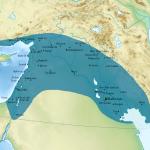
Neriglissar ruled during the final decades of the Neo-Babylonian Empire, a period marked by both cultural flourishing and political instability. The empire, founded by Nabopolassar and expanded by Nebuchadnezzar II, was a dominant power in the ancient Near East, controlling vast territories from the Persian Gulf to the Mediterranean. However, by the mid-6th century BCE, internal power struggles and weak leadership began to undermine its stability.
Neriglissar’s rise to power reflects the turbulent nature of Babylonian politics at the time. His overthrow of Amel-Marduk, the son of Nebuchadnezzar II, suggests a breakdown in dynastic loyalty and a shift toward military or bureaucratic factions vying for control. Despite his short reign, Neriglissar’s efforts to maintain Babylon’s infrastructure and military strength were crucial in delaying the empire’s eventual collapse. His reign also highlights the growing influence of Persia, which would soon conquer Babylon under Cyrus the Great, ending the Neo-Babylonian dynasty.
Beliefs
Neriglissar, like other Babylonian kings, adhered to the traditional Mesopotamian religious beliefs centered around the worship of gods such as Marduk, the patron deity of Babylon, and Nergal, the god of war and the underworld (whose name appears in Neriglissar’s own). Babylonian kings were expected to uphold the religious order, restore temples, and perform rituals to ensure divine favor. Neriglissar’s construction projects, particularly his work on temples, reflect his commitment to these religious duties.
Key Achievements
- Military Campaigns: Led successful expeditions to Cilicia to suppress rebellions and secure Babylonian control over the region.
- Overthrow of Amel-Marduk: Seized the throne in a coup, stabilizing the empire after a period of political unrest.
- Construction Projects: Restored and fortified temples in Babylon, including the Esagila, the temple of Marduk, demonstrating his commitment to religious and civic duties.
- Short but Stable Reign: Maintained relative stability during his four-year rule, despite the empire’s underlying weaknesses.
- Dynastic Marriage: Strengthened his claim to the throne by marrying a daughter of Nebuchadnezzar II, linking himself to the previous dynasty.