Links
Life events
Wikipedia ↗
Wikipedia ↗
Wikipedia ↗
Wikipedia ↗
Wikipedia ↗
Wikipedia ↗
Wikipedia ↗
Article
Life Summary
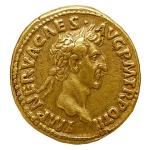
Marcus Cocceius Nerva was born on November 8, 30 CE, in Narni, Italy, into a distinguished senatorial family. His early career included roles as a praetor and consul under Nero and later under Vespasian. Nerva was known for his legal expertise and diplomatic skills, which earned him respect in the Roman Senate. Following the assassination of Emperor Domitian in 96 CE, Nerva was proclaimed emperor by the Senate, marking the beginning of the Nerva-Antonian dynasty. His reign was short but pivotal, as he worked to restore stability and repair the damage caused by Domitian's autocratic rule. Nerva adopted Trajan as his successor, ensuring a smooth transition of power. He died on January 27, 98 CE, in Rome, after a brief but impactful reign.
Historical Context
Nerva's rise to power occurred during a turbulent period in Roman history. The assassination of Domitian, the last of the Flavian emperors, left a power vacuum that threatened the stability of the empire. The Senate, eager to reassert its authority, turned to Nerva, a respected and elderly senator, as a compromise candidate. His reign marked the beginning of the "Five Good Emperors" era, a period characterized by relative peace, prosperity, and competent leadership. Nerva's decision to adopt Trajan, a capable military leader, as his successor set a precedent for merit-based succession that would define the Nerva-Antonian dynasty. His policies aimed to heal the divisions caused by Domitian's reign, including financial reforms and the alleviation of oppressive taxes.
Beliefs
Nerva was a traditionalist who believed in the principles of the Roman Republic, emphasizing the importance of the Senate and the rule of law. He was known for his moderation, justice, and commitment to restoring the dignity of the imperial office after the tyranny of Domitian. His adoption of Trajan reflected his belief in meritocracy and the need for strong, capable leadership to ensure the stability of the empire.
Key Achievements
- Restoration of Stability: Nerva stabilized the Roman Empire after the chaotic end of Domitian's reign, restoring confidence in the imperial office.
- Financial Reforms: He implemented policies to alleviate the financial burdens imposed by Domitian, including tax reductions and land redistribution to the poor.
- Adoption of Trajan: Nerva adopted Trajan as his successor, ensuring a smooth transition of power and establishing a precedent for merit-based succession.
- Building Projects: He initiated public works, including the construction of granaries, roads, and aqueducts, to improve infrastructure and quality of life.
- Alimentary System: Nerva expanded the alimentary system, a welfare program that provided financial support to poor children in Italy, ensuring their education and upbringing.
- Senate Relations: He restored the Senate's authority and worked to rebuild trust between the emperor and the senatorial class, reversing Domitian's oppressive policies.