Links
Life events
Wikipedia ↗
Wikipedia ↗
Wikipedia ↗
Wikipedia ↗
Wikipedia ↗
Wikipedia ↗
Wikipedia ↗
Article
Life Summary
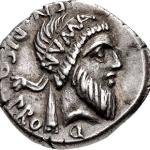
Numa Pompilius was the legendary second king of Rome, succeeding Romulus. According to tradition, he was born on the day of Rome's founding (April 21, 753 BCE) and reigned from 715 BCE until his death in 673 BCE. Unlike his predecessor, Numa was known for his piety and wisdom rather than martial prowess. He was of Sabine origin and was chosen as king by the Roman Senate after an interregnum following Romulus's disappearance. Numa is said to have been a student of Pythagoras, though this is chronologically unlikely. His reign was marked by peace and the establishment of many of Rome's religious and political institutions. He married the nymph Egeria, who was said to have advised him on religious matters. Numa died of old age, and his peaceful reign was seen as a contrast to the warlike rule of Romulus.
Historical Context
Numa Pompilius is a semi-legendary figure whose life and reign are shrouded in myth, but his story reflects the early development of Rome as a city-state. During his purported reign in the 8th and 7th centuries BCE, Rome was transitioning from a collection of villages into a unified political and religious entity. The Romans of later periods attributed many of their religious and legal traditions to Numa, suggesting his importance in the cultural memory of the city. His reign symbolized the ideal of a peaceful, lawful, and pious ruler, which contrasted with the more violent and expansionist policies of later Roman leaders. Numa's legacy lies in the foundation of Rome's religious and civic institutions, which played a crucial role in shaping Roman identity and governance.
Beliefs
Numa Pompilius is traditionally credited with establishing Rome's religious framework. He was believed to have instituted the priestly colleges, including the Pontifex Maximus, and introduced the Vestal Virgins, who tended the sacred fire of Vesta. He also reorganized the calendar, adding January and February to the original ten-month Roman calendar. Numa was said to have believed in the importance of divine guidance in governance, often consulting with the gods through augury and other forms of divination. His close relationship with the nymph Egeria symbolized his connection to divine wisdom and the natural world.
Key Achievements
- Established the office of Pontifex Maximus, the high priest of Rome, which became a central religious institution.
- Introduced the Vestal Virgins, a group of priestesses dedicated to the goddess Vesta, who maintained the sacred fire of Rome.
- Reorganized the Roman calendar, adding January and February to create a 12-month year.
- Founded the Temple of Janus, whose doors were closed during times of peace, a rare occurrence in Roman history.
- Instituted the Flamines, priests dedicated to specific deities, and the Salii, a college of priests associated with Mars.
- Created the Fetiales, a college of priests responsible for overseeing treaties and declarations of war, emphasizing the importance of ritual in international relations.
- Promoted peace and stability during his reign, avoiding war and focusing on the cultural and religious development of Rome.
- Attributed with writing sacred texts and laws, though these are likely later fabrications reflecting his legendary status.