Links
Life events
Wikipedia ↗
Wikipedia ↗
Wikipedia ↗
Wikipedia ↗
Wikipedia ↗
Wikipedia ↗
Wikipedia ↗
Wikipedia ↗
Wikipedia ↗
Wikipedia ↗
Wikipedia ↗
Article
Life Summary
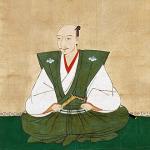
Oda Nobunaga was born on June 23, 1534, in the Owari Province of Japan, to Oda Nobuhide, a minor warlord. From a young age, Nobunaga was known for his eccentric behavior, but he quickly proved himself a capable leader after inheriting his father’s domain in 1551. He began consolidating power by defeating rival clans, including the Imagawa at the Battle of Okehazama in 1560, where his outnumbered forces achieved a decisive victory. Over the next two decades, Nobunaga expanded his influence through a combination of military campaigns, strategic alliances, and innovative tactics, such as the use of firearms. His rule was marked by both brilliance and brutality, as he crushed opposition with ruthless efficiency. In 1582, while preparing to confront his last major rival, Nobunaga was betrayed by his general Akechi Mitsuhide and forced to commit seppuku at Honnō-ji Temple in Kyoto on June 21, 1582.
Historical Context
Nobunaga lived during Japan’s Sengoku period (1467–1615), an era of near-constant civil war among feudal lords (daimyo) vying for supremacy. This period was characterized by the collapse of centralized authority, as the Ashikaga shogunate weakened and regional warlords fought for dominance. Nobunaga’s rise occurred at a time when Japan was fragmented, and his efforts to unify the country laid the groundwork for the eventual establishment of the Tokugawa shogunate. His policies, such as the abolition of toll barriers, encouragement of trade, and promotion of Christianity (initially as a counterbalance to Buddhist power), reflected a vision of a more centralized and economically integrated Japan. Nobunaga’s legacy is pivotal because he set the stage for the unification of Japan under his successors, Toyotomi Hideyoshi and Tokugawa Ieyasu, ending centuries of warfare.
Beliefs
Nobunaga was known for his pragmatic and often ruthless approach to governance. He was indifferent to traditional Japanese religions, particularly Buddhism, which he saw as a political threat due to the power of Buddhist monasteries. He destroyed several major temples, including Enryaku-ji on Mount Hiei, to weaken their influence. Conversely, he initially tolerated and even supported Christianity, allowing Jesuit missionaries to operate in his domains as a counterbalance to Buddhist power. Nobunaga also valued meritocracy, promoting individuals based on ability rather than birth, which was revolutionary in feudal Japan. His belief in strong, centralized rule and his willingness to adopt Western technology (such as firearms) demonstrated his forward-thinking mindset.
Key Achievements
- Military Innovations: Pioneered the use of massed arquebus (firearm) volleys in battle, revolutionizing Japanese warfare at the Battle of Nagashino (1575).
- Unification of Central Japan: Conquered and consolidated much of central Japan, including the provinces of Owari, Mino, and Ise, by the 1560s.
- Defeat of the Imagawa Clan: Achieved a legendary victory at the Battle of Okehazama (1560), where his forces defeated a much larger army through surprise and strategy.
- Destruction of the Takeda Clan: Crushed the powerful Takeda clan at the Battle of Nagashino (1575), eliminating a major rival.
- Economic Reforms: Abolished toll barriers and promoted free markets, stimulating trade and economic growth in his territories.
- Cultural Patronage: Supported the arts, including Noh theater and tea ceremony, and fostered cultural exchange with European traders and missionaries.
- Construction of Azuchi Castle: Built the grand Azuchi Castle (1576–1579), which symbolized his power and served as a model for future Japanese castles.
- Suppression of Buddhist Power: Destroyed powerful Buddhist monasteries, such as Enryaku-ji and Ishiyama Hongan-ji, to reduce their political influence.