Links
Life events
Wikipedia ↗
Wikipedia ↗
Wikipedia ↗
Wikipedia ↗
Wikipedia ↗
Wikipedia ↗
Wikipedia ↗
Wikipedia ↗
Wikipedia ↗
Wikipedia ↗
Wikipedia ↗
Article
Life Summary
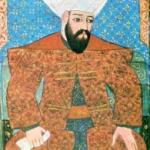
Orhan Gazi, also known as Orhan Bey, was born in 1281 in Söğüt, the second ruler of the Ottoman Empire after his father, Osman I. He ascended to the throne in 1323 or 1324 following his father's death and ruled until his own death in 1362. Orhan's early life was shaped by the military campaigns and state-building efforts initiated by his father. He continued these efforts, significantly expanding Ottoman territory through conquests in northwestern Anatolia, including the capture of Bursa in 1326, which became the empire's new capital. Orhan also led campaigns into the Balkans, laying the groundwork for future Ottoman expansion into Europe. He married Theodora, the daughter of Byzantine Emperor John VI Cantacuzenus, as part of a political alliance. Orhan died in 1362 and was succeeded by his son, Murad I.
Historical Context
Orhan Gazi ruled during a transformative period for the Ottoman Empire, which was emerging as a dominant power in the region following the decline of the Seljuk Sultanate of Rum and the weakening of the Byzantine Empire. The 14th century was marked by political fragmentation in Anatolia, with numerous beyliks (Turkish principalities) vying for power. Orhan capitalized on this instability, consolidating Ottoman control over neighboring territories and establishing a centralized administration. His reign also saw the Ottomans' first significant incursions into Europe, setting the stage for the empire's future expansion. Orhan's policies, including the establishment of a standing army (the Janissaries) and the introduction of the first Ottoman coins, were instrumental in transforming the Ottomans from a frontier principality into a formidable empire. His strategic marriages and alliances with Byzantine rulers further solidified Ottoman influence in the region.
Beliefs
Orhan Gazi was a devout Muslim and adhered to the Sunni Islamic tradition, which was central to the Ottoman state's identity. He promoted Islamic principles in governance and supported the construction of mosques, madrasas (Islamic schools), and other religious institutions. His policies reflected a blend of Islamic values and pragmatic statecraft, as he sought to legitimize Ottoman rule through both military conquest and religious patronage. Orhan's alliance with the Byzantine Empire, including his marriage to Theodora, also demonstrated his willingness to engage with non-Muslim powers for strategic advantage.
Key Achievements
- Capture of Bursa (1326): Orhan seized Bursa from the Byzantines, making it the Ottoman Empire's new capital and a center of political and economic power.
- Expansion into Anatolia: He consolidated Ottoman control over northwestern Anatolia, including the conquest of Nicaea (1331) and Nicomedia (1337), further weakening Byzantine influence in the region.
- First Ottoman Coinage: Orhan introduced the first Ottoman silver coins, known as akçe, which standardized the empire's economy and facilitated trade.
- Establishment of the Janissaries: He created the Janissary corps, a standing army of elite soldiers, which became a cornerstone of Ottoman military power.
- Conquests in the Balkans: Orhan led the Ottomans' first major incursions into Europe, capturing Gallipoli (1354) and establishing a foothold in the Balkans.
- Alliance with Byzantium: His marriage to Theodora, daughter of Byzantine Emperor John VI Cantacuzenus, strengthened diplomatic ties and secured Ottoman influence in Byzantine affairs.
- Administrative Reforms: Orhan implemented administrative and legal reforms, including the establishment of a centralized bureaucracy and the introduction of Islamic law (Sharia) in Ottoman governance.
- Patronage of Islamic Institutions: He supported the construction of mosques, madrasas, and dervish lodges, fostering the spread of Islamic culture and education within the empire.