Links
Life events
Wikipedia ↗
Wikipedia ↗
Wikipedia ↗
Wikipedia ↗
Wikipedia ↗
Wikipedia ↗
Wikipedia ↗
Wikipedia ↗
Article
Life Summary
Piye, also known as Piankhi, was a Kushite king who ruled the Kingdom of Kush (modern-day Sudan) from the city of Napata. Born around 775 BCE, he was the son of King Kashta, who had already begun the Kushite expansion into Upper Egypt. Piye ascended to the throne around 744 BCE and is best known for his military campaign to conquer Egypt, which he documented in the Victory Stela at Gebel Barkal. His conquest of Egypt in 728 BCE marked the beginning of the Twenty-fifth Dynasty, often referred to as the Kushite Dynasty, where he ruled as pharaoh. Piye maintained traditional Egyptian customs and religion, presenting himself as a restorer of Egyptian values. He died around 714 BCE and was buried in a pyramid at El-Kurru, near Napata, following the Egyptian tradition of royal burials.
Historical Context
Piye’s reign occurred during a period of fragmentation in Egypt, known as the Third Intermediate Period. Egypt was divided among local rulers, and the authority of the pharaoh had weakened significantly. Meanwhile, the Kingdom of Kush, located to the south in Nubia, had grown in power and wealth, particularly due to its control over trade routes and resources like gold. Piye’s conquest of Egypt was not merely a military endeavor but also a cultural and religious mission. He positioned himself as a defender of traditional Egyptian values, particularly the worship of Amun, and sought to unify Egypt under his rule. His reign marked the beginning of the Kushite Dynasty, which would see Egypt reunited and briefly restored to its former glory before the Assyrian invasion. Piye’s legacy lies in his ability to bridge the cultures of Kush and Egypt, creating a dynasty that left a lasting impact on both regions.
Beliefs
- Piye was a devout follower of the god Amun, whom he associated with the Kushite deity Amun of Napata.
- He believed in the divine right of kings and presented himself as a restorer of Ma’at (cosmic order) in Egypt.
- Piye adhered to traditional Egyptian religious practices, including the construction of temples and the performance of rituals.
- He saw his conquest of Egypt as a religious duty to restore proper worship of Amun and to unify the land under a righteous ruler.
Key Achievements
- Conquest of Egypt: Successfully invaded and conquered Egypt in 728 BCE, unifying the country under his rule and founding the Twenty-fifth Dynasty.
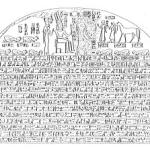
- Victory Stela: Commissioned the Victory Stela at Gebel Barkal, a detailed inscription documenting his military campaign and ideological justification for his rule.
- Restoration of Egyptian Traditions: Revived traditional Egyptian religious and cultural practices, positioning himself as a restorer of Ma’at.
- Architectural Contributions: Oversaw the construction and restoration of temples, including the Temple of Amun at Gebel Barkal and the Temple of Mut at Karnak.
- Dynastic Legacy: Established a dynasty that ruled Egypt for nearly a century, leaving a lasting impact on both Egyptian and Kushite history.
- Burial Practices: Introduced the construction of pyramids for royal burials in Kush, blending Egyptian and Nubian traditions.
- Trade and Prosperity: Strengthened trade networks between Kush and Egypt, enhancing the economic prosperity of both regions.