Links
Life events
Wikipedia ↗
Wikipedia ↗
Wikipedia ↗
Wikipedia ↗
Wikipedia ↗
Wikipedia ↗
Wikipedia ↗
Wikipedia ↗
Article
Life Summary
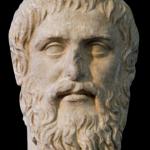
Plato was born around 428/427 BCE in Athens, Greece, into an aristocratic family. His birth name was Aristocles, but he was later nicknamed "Plato" (meaning "broad") due to his physical build or the breadth of his intellect. He was a student of Socrates and later became the teacher of Aristotle. Plato's early life was marked by political turmoil, including the Peloponnesian War and the rule of the Thirty Tyrants, which influenced his disillusionment with Athenian democracy. After Socrates' execution in 399 BCE, Plato traveled extensively, studying mathematics, geometry, and philosophy in Egypt and Italy. Upon returning to Athens, he founded the Academy around 387 BCE, the first institution of higher learning in the Western world. Plato spent the remainder of his life teaching and writing, producing dialogues that explored ethics, politics, metaphysics, and epistemology. He died around 348/347 BCE in Athens, leaving behind a profound legacy in philosophy and education.
Historical Context
Plato lived during the Classical period of Ancient Greece, a time of significant intellectual, political, and cultural development. Athens, his birthplace, was a hub of philosophical inquiry and democratic experimentation, though it also faced internal strife and external conflicts, such as the Peloponnesian War (431–404 BCE). The execution of Socrates, Plato's mentor, deeply affected him and shaped his philosophical outlook, particularly his views on justice, governance, and the role of the philosopher in society. Plato's work emerged during a transitional phase in Greek history, as the dominance of Athens waned and the rise of Macedon under Philip II began. His Academy became a model for future educational institutions, and his ideas laid the groundwork for Western philosophy, influencing thinkers from Aristotle to modern philosophers. Plato's dialogues, such as The Republic, Phaedo, and Symposium, addressed timeless questions about truth, virtue, and the ideal state, making him one of the most pivotal figures in intellectual history.
Beliefs
- Theory of Forms: Plato believed in a realm of abstract, perfect "Forms" or "Ideas" that exist beyond the physical world. These Forms are the true reality, while the material world is merely a shadow or imitation of them.
- Dualism: He posited a dualistic view of human existence, separating the immortal soul from the mortal body.
- Philosopher-Kings: In The Republic, Plato argued that the ideal state should be ruled by philosopher-kings, individuals trained in wisdom and virtue, rather than by democratic or tyrannical systems.
- Epistemology: Plato emphasized the importance of reason and dialectic as paths to true knowledge, contrasting it with mere opinion or sensory experience.
- Ethics: He believed that virtue is knowledge and that living a just life requires understanding the Form of the Good.
Key Achievements
- Founding the Academy: Established the Academy in Athens, the first institution of higher learning in the Western world, which operated for nearly 900 years and influenced the development of universities.
- Authoring Philosophical Dialogues: Wrote over 30 dialogues, including The Republic, Phaedo, Symposium, and Apology, which remain foundational texts in Western philosophy.
- Theory of Forms: Developed the metaphysical concept of Forms, which became a cornerstone of Platonic philosophy and influenced later philosophical and theological thought.
- Socratic Method: Preserved and expanded upon Socrates' dialectical method of questioning, which became a key tool in philosophical inquiry and education.
- Political Philosophy: Introduced the idea of a utopian society ruled by philosopher-kings in The Republic, shaping discussions on governance and justice for centuries.
- Influence on Aristotle: Mentored Aristotle, who became one of the most influential philosophers in history, ensuring Plato's ideas would be further developed and disseminated.
- Mathematical and Scientific Contributions: Emphasized the importance of mathematics in understanding the universe, influencing later scientific thought, including that of Galileo and Kepler.
- Legacy in Education: His Academy set a precedent for structured education, combining philosophy, mathematics, and physical training, which became a model for later educational systems.