Links
Life events
Wikipedia ↗
Wikipedia ↗
Wikipedia ↗
Wikipedia ↗
Wikipedia ↗
Wikipedia ↗
Wikipedia ↗
Article
Life Summary
Psusennes I, also known as Pasebakhaenniut I, was the third pharaoh of the 21st Dynasty of ancient Egypt, ruling from approximately 1047 to 1001 BCE. His reign was centered in Tanis, which became the new political and religious capital of Egypt during this period. Psusennes I was the son of Pinedjem I, the High Priest of Amun at Thebes, who effectively ruled Upper Egypt, while Psusennes governed Lower Egypt from Tanis. This division of power marked a significant shift in Egyptian politics, reflecting the decentralization of authority following the decline of the New Kingdom.
Psusennes I’s birth name, Pasebakhaenniut, means "The Star Appearing in the City," while his throne name, Akheperre Setepenamun, translates to "Great are the Manifestations of Re, Chosen of Amun." Little is known about his early life, but his reign is notable for its stability and efforts to consolidate power in a fragmented Egypt. He married his sister, Mutnedjmet, and possibly another wife named Wiay, with whom he had a son, Amenemope, who succeeded him as pharaoh.
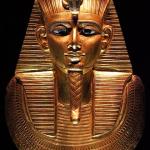
Psusennes I died around 1001 BCE and was buried in a tomb at Tanis, which was discovered intact by French archaeologist Pierre Montet in 1940. His mummy, golden death mask, and elaborate funerary equipment provided invaluable insights into the burial practices and craftsmanship of the 21st Dynasty. Unlike many other pharaohs, his tomb had not been looted, offering a rare glimpse into the wealth and artistry of the period.
Historical Context
Psusennes I ruled during the Third Intermediate Period of Egypt, a time characterized by political fragmentation and the division of power between the pharaohs in the north (based in Tanis) and the High Priests of Amun in the south (based in Thebes). This era followed the collapse of the New Kingdom, which had been weakened by internal strife, economic decline, and external invasions, particularly by the Sea Peoples. The 21st Dynasty marked the beginning of a new phase in Egyptian history, where the country was no longer a unified, centralized state but rather a collection of regional powers.
The capital was moved from Thebes to Tanis during this period, reflecting the shift in political and religious influence. Tanis became a major center of worship for the god Amun, and Psusennes I played a crucial role in promoting its importance. His reign is often seen as a period of relative stability, as he managed to maintain control over Lower Egypt and foster diplomatic relations with neighboring regions. However, the division between Upper and Lower Egypt persisted, setting the stage for further fragmentation in the centuries to come.
Psusennes I’s significance lies in his ability to navigate the challenges of a divided Egypt. His intact tomb, one of the few discovered in modern times, has provided historians with a wealth of information about the 21st Dynasty, including its art, religion, and burial practices. His golden death mask, in particular, is often compared to that of Tutankhamun, highlighting the continuity of Egyptian craftsmanship and religious traditions despite the political upheavals of the time.
Key Achievements
- Stabilized Rule in Lower Egypt: Psusennes I successfully maintained control over Lower Egypt during a period of political fragmentation, ensuring relative stability in the region.
- Promoted Tanis as a Religious Center: He elevated Tanis as a major religious hub, particularly for the worship of Amun, and oversaw the construction and restoration of temples in the city.
- Intact Tomb Discovery: His tomb, discovered in 1940, was one of the few royal burials found intact, providing invaluable artifacts and insights into the 21st Dynasty.
- Golden Death Mask: His golden death mask, comparable in craftsmanship to that of Tutankhamun, is a testament to the enduring artistry and religious traditions of ancient Egypt.
- Diplomatic Relations: Psusennes I fostered diplomatic ties with neighboring regions, helping to secure Egypt’s position during a time of external threats and internal division.
- Burial of High-Status Individuals: He oversaw the reburial of earlier pharaohs, including Ramesses II and Seti I, in an effort to protect their remains and honor their legacies.
- Economic and Administrative Reforms: While details are scarce, his reign is associated with efforts to stabilize Egypt’s economy and administration during a challenging period.
- Cultural Continuity: Despite the political fragmentation, Psusennes I upheld traditional Egyptian religious and cultural practices, ensuring their survival into the Third Intermediate Period.