Links
Life events
Wikipedia ↗
Wikipedia ↗
Wikipedia ↗
Wikipedia ↗
Wikipedia ↗
Wikipedia ↗
Wikipedia ↗
Wikipedia ↗
Wikipedia ↗
Article
Life Summary
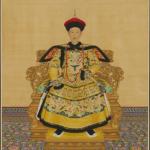
The Qianlong Emperor, born Aisin Gioro Hongli on September 25, 1711, was the fourth son of the Yongzheng Emperor and the sixth emperor of the Qing dynasty. He ascended to the throne in 1735 at the age of 24 and ruled for 60 years until his abdication in 1796, making him one of China's longest-reigning monarchs. His reign marked the height of the Qing dynasty's power, prosperity, and cultural achievement.
Hongli was a diligent student from an early age, mastering Manchu, Chinese, Mongolian, and Tibetan languages. He was also well-versed in Confucian classics, poetry, and calligraphy. His father, the Yongzheng Emperor, groomed him for leadership, and upon his death in 1735, Hongli succeeded the throne, taking the reign name Qianlong.
During his reign, the Qianlong Emperor expanded the Qing empire's territory through military campaigns, known as the Ten Great Campaigns, which secured regions such as Xinjiang, Mongolia, and Tibet. He also maintained a strong central government, promoted economic growth, and supported cultural endeavors, including the compilation of the Siku Quanshu, the largest collection of books in pre-modern China.
The Qianlong Emperor abdicated in 1796 in favor of his son, the Jiaqing Emperor, to avoid ruling longer than his grandfather, the Kangxi Emperor. However, he retained power as a retired emperor until his death on February 7, 1799, at the age of 87.
Historical Context
The Qianlong Emperor's reign (1735–1796) occurred during a period of significant global change. In China, the Qing dynasty was at its zenith, with the empire enjoying unparalleled prosperity, stability, and territorial expansion. This era, often referred to as the "High Qing," saw China's population double, its economy thrive, and its cultural influence spread across Asia.
Internationally, the Qianlong Emperor's reign coincided with the rise of European colonial powers. The British, in particular, sought to expand trade with China, leading to the Macartney Mission in 1793. The emperor's famous rejection of British trade demands, encapsulated in his letter to King George III, reflected China's self-perception as the "Middle Kingdom" and its reluctance to engage in unequal diplomatic relations. This interaction foreshadowed the challenges China would face in the 19th century as Western powers sought to open its markets.
The Qianlong Emperor's rule was also marked by efforts to consolidate Manchu identity and maintain ethnic harmony within the empire. He promoted Confucian ideals while also supporting Tibetan Buddhism and other minority cultures. His reign saw the flourishing of arts, literature, and scholarship, leaving a lasting legacy on Chinese culture.
Beliefs
- Confucianism: The Qianlong Emperor was a devout follower of Confucian principles, emphasizing filial piety, loyalty, and moral governance. He saw himself as the embodiment of the Confucian sage-king, ruling with virtue and wisdom.
- Manchu Identity: While embracing Chinese culture, he also sought to preserve Manchu traditions and military prowess, ensuring the ruling elite remained distinct from the Han majority.
- Cultural Superiority: He believed in China's centrality in the world and its cultural superiority, which influenced his foreign policy and interactions with Western powers.
- Buddhism: The emperor was a patron of Tibetan Buddhism, particularly the Gelug school, and maintained close ties with the Dalai Lama and Panchen Lama.
Key Achievements
- Territorial Expansion: Through the Ten Great Campaigns, he expanded the Qing empire to its greatest territorial extent, incorporating regions such as Xinjiang, Mongolia, and Tibet.
- Cultural Flourishing: Oversaw the compilation of the Siku Quanshu, the largest collection of books in pre-modern China, containing over 3,400 works and 36,000 volumes.
- Economic Prosperity: His reign saw significant economic growth, with China's population reaching over 300 million and its economy becoming the largest in the world.
- Military Strength: Maintained a powerful and disciplined military, ensuring the stability and security of the Qing empire.
- Art and Literature: Patronized the arts, leading to a golden age of Chinese painting, calligraphy, and literature. His own poetry and calligraphy were highly regarded.
- Infrastructure Development: Invested in public works, including water conservancy projects, roads, and granaries, to improve the lives of his subjects.
- Religious Tolerance: Promoted religious harmony by supporting Confucianism, Buddhism, and other faiths, fostering stability among diverse ethnic groups.
- Diplomatic Relations: Managed complex diplomatic relations with neighboring states and European powers, maintaining China's sovereignty and prestige.