Links
Life events
Wikipedia ↗
Wikipedia ↗
Wikipedia ↗
Wikipedia ↗
Wikipedia ↗
Wikipedia ↗
Article
Life Summary
Ramagupta was a ruler of the Gupta Empire, succeeding his father Samudragupta. His reign is shrouded in controversy, primarily due to accounts in later Sanskrit plays and inscriptions. According to the Devichandraguptam, a Sanskrit play, Ramagupta was forced to surrender his queen Dhruvadevi to a Shaka king after a military defeat. His younger brother, Chandragupta II, disguised himself as the queen and assassinated the Shaka ruler, later overthrowing Ramagupta to claim the throne. Historical evidence for Ramagupta’s existence is sparse, with his name appearing on a few coins and inscriptions, such as the Sanchi inscription of Chandragupta II, which mentions Ramagupta as a predecessor. His exact birth and death dates remain uncertain, though his reign is estimated to have occurred in the late 4th century CE.
Historical Context
Ramagupta’s reign falls within the golden age of the Gupta Empire, a period marked by significant advancements in art, science, and literature. The Gupta Empire, often referred to as India’s classical age, saw the flourishing of Hindu culture, the patronage of scholars like Kalidasa, and the establishment of trade networks extending to the Roman Empire and Southeast Asia. Ramagupta’s contested rule highlights the dynastic struggles and political intrigues common in ancient Indian kingdoms. His story, though partially legendary, reflects the power dynamics and military challenges faced by the Gupta rulers, particularly against foreign invaders like the Shakas. His brief reign and subsequent overthrow by Chandragupta II underscore the fragility of succession and the importance of military prowess in maintaining imperial authority.
Beliefs
While specific details about Ramagupta’s personal beliefs are scarce, he likely adhered to the Hindu traditions prevalent during the Gupta period. The Gupta Empire was a time of Hindu revival, with rulers patronizing Brahmanical rituals, temple construction, and the composition of religious texts. The Devichandraguptam play, which recounts Ramagupta’s story, reflects the cultural and religious values of the time, emphasizing dharma (duty), heroism, and the protection of honor. Ramagupta’s actions, as depicted in the play, suggest a conflict between personal honor and political expediency, a theme common in ancient Indian literature.
Key Achievements
- Succession to the Gupta Throne: Briefly ruled the Gupta Empire as the successor to Samudragupta, though his reign was marked by controversy.
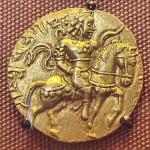
- Coinage: Issued coins bearing his name, providing numismatic evidence of his existence and reign.
- Mention in Inscriptions: Referenced in the Sanchi inscription of Chandragupta II, which acknowledges him as a predecessor.
- Cultural Legacy: His story, though semi-legendary, became a subject of Sanskrit drama, reflecting the literary and theatrical traditions of the Gupta era.
- Military Campaigns: Engaged in conflicts with the Shaka rulers, highlighting the Gupta Empire’s ongoing struggles with foreign invaders.